
Hearing scratching in the walls at night is one of those winter sounds nobody wants.
Here’s how to keep mice out of wall voids using natural methods that actually work — not just a few drops of oil and hope.
The fastest way to stop mice in walls is not a spray. It is sealing the gaps they use, removing food and nesting spots, and then adding natural deterrents as backup. Most homeowners who do those three things see activity drop within 1–3 weeks.
Save this guide — winter is when mice look hardest for a warm place to hide.
Quick Answer
The most effective natural way to keep mice out of walls in winter is exclusion first: seal holes around pipes, vents, garage corners, and foundation gaps. Then reduce food sources and use peppermint oil, steel wool, and monitoring as support. Scent alone rarely stops mice that already found a warm wall void.
Why Mice Move Into Walls in Winter
Mice don’t suddenly appear because the house “attracts them.” They move in because winter makes outdoor nesting harder. Wall voids offer three things they want:
- warmth from indoor heating
- hidden travel routes
- quiet places to nest near kitchens, garages, and pantries
Once a mouse finds a gap the size of a dime, others can follow the same path. That’s why one scratching sound in November often becomes a bigger problem by January if the entry points stay open.
My Personal Experience with Winter Mice in Walls
A few winters ago I got a call from a homeowner who swore peppermint oil wasn’t working. They had cotton balls in every cabinet and still heard movement in the wall behind the stove.
When I inspected the garage side of that wall, the problem was obvious. There was a gap around a pipe sleeve, a loose corner of weatherstripping on the side door, and a bag of birdseed stored two feet away. The mice didn’t need to “ignore” peppermint. They already had a heated highway and a food source.
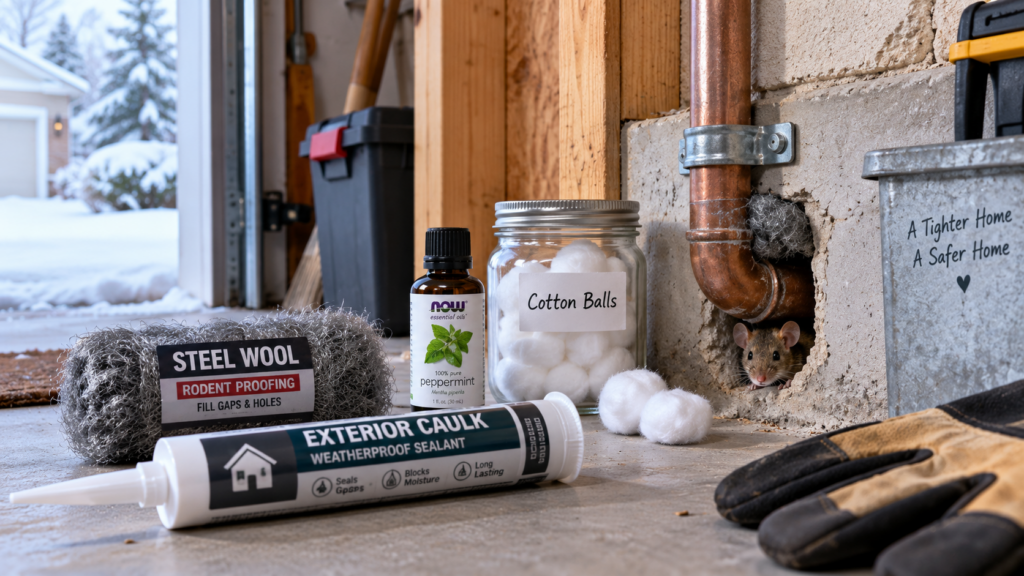
We sealed the pipe gap with steel wool and caulk, added a door sweep, moved the seed into a sealed container, and only then used peppermint near the remaining interior spots. Within two weeks the scratching stopped. That job is the reason I never tell people to start with scent. Start with the hole.
Natural Methods That Actually Help
1. Seal Entry Points First
This is the most important step. Mice can squeeze through openings as small as 1/4 inch.
Check these spots carefully:
- gaps around water pipes and gas lines
- holes where cables enter the house
- garage-to-house door edges
- dryer vents and utility penetrations
- cracks along the foundation and sill plate
- spaces under garage side doors
Use steel wool or copper mesh in the gap, then seal over it with caulk or expanding foam made for small gaps. Steel wool matters because mice can chew through foam alone.
If you skip this step, every other method becomes temporary.
2. Remove What Attracts Them Indoors
Mice follow food, crumbs, pet kibble, and cardboard.
- Store dry goods in sealed containers
- Don’t leave pet food out overnight
- Take kitchen trash out before bed
- Move birdseed, grass seed, and dog food off the garage floor
- Reduce cardboard piles near walls
A clean kitchen will not stop a mouse that already lives in the wall. But it does stop the nightly trips that keep the infestation active.
3. Use Peppermint Oil the Right Way
Peppermint oil can help as a deterrent near fresh entry points. It is not a stand-alone solution once mice are established.
Simple method:
- Soak cotton balls with 10–15 drops of peppermint oil
- Place them near sealed gaps, garage corners, and cabinet backs
- Replace every 5–7 days, or sooner if the scent fades
Do not soak electrical outlets or shove oily cotton into heat sources. Use it as a supporting scent barrier after sealing, not instead of sealing.
4. Block Wall Access From the Garage and Basement
A lot of “mice in the walls” problems start in attached garages and unfinished basements. Those spaces are colder than living rooms, but warmer than the yard.
Look for:
- open wall cavities
- unfinished drywall edges
- stored clutter against exterior walls
- gaps around water heaters and HVAC lines
Keep storage off the floor and away from walls when possible. A six-inch gap makes inspection much easier.
5. Add Natural Monitoring Before You Guess
If you hear scratching but never see a mouse, don’t start randomly treating every room.
Place a few non-poison monitoring options along likely runways:
- flour or cornstarch dusted lightly near a suspected gap
- a small dish of peanut butter on a lid to confirm activity
- snap traps or live traps in the garage, not inside wall voids
The point is to confirm where they travel. Treating the wrong room wastes time.
6. Reduce Warm Hiding Spots
Mice like insulation gaps, stored fabrics, and undisturbed clutter. In winter they often nest close to heat.
- Don’t store old blankets against garage walls
- Fix torn insulation where you can safely reach it
- Keep firewood outside, not stacked against the house
- Repair loose vent covers
The less sheltered the wall edge is, the less attractive it becomes.
7. Combine Methods for 14 Days
The system that works best looks like this:
Day 1: inspect and seal obvious gaps
Day 2: clean food sources and garage storage
Days 3–14: refresh peppermint, monitor activity, and seal any new gaps you find
Most light winter problems improve in that window. If scratching continues after sealing and sanitation, the nest may already be deeper in the wall and need a more targeted follow-up.
Comparison Table: Natural Mouse Control Methods
| Method | Effectiveness | Speed | Cost | Safety | Best For | My Rating |
|---|---|---|---|---|---|---|
| Sealing entry points | Excellent | Long-term | Low–Med | Excellent | Prevention and lasting results | 10/10 |
| Steel wool + caulk | Excellent | Immediate | Low | Excellent | Pipe gaps and small holes | 9.5/10 |
| Food and clutter control | Very Good | 3–7 days | Free | Excellent | Kitchens and garages | 9/10 |
| Peppermint oil | Moderate | Short-term | Low | Good | Fresh entry points after sealing | 7/10 |
| Monitoring / tracking | Very Good | 1–3 days | Low | Excellent | Finding active routes | 9/10 |
| Live or snap traps | Good | 1–7 days | Low | Good | Mice already inside | 8/10 |
| Ultrasonic devices | Low | Unreliable | Medium | Excellent | Not a primary method | 4/10 |
How Fast Will This Work?
- Day 1–2: sealing stops new entry
- Day 3–7: indoor travel usually drops if food is removed
- Week 2–3: scratching often fades in light cases
- If noise continues: there may be an existing nest in the wall cavity
Natural methods work. They just work in the right order.
Common Mistakes Homeowners Make
The biggest mistake is treating the sound instead of the entry. People hear scratching in a bedroom wall and put peppermint on the nightstand. The mouse is usually coming from a garage gap, kitchen pipe, or foundation crack several feet away.
Other common mistakes:
- using foam without steel wool
- leaving pet food out “just overnight”
- sealing one hole and ignoring the rest
- assuming one quiet night means the problem is gone
- storing seed and trash in the same corner of the garage
If mice already know the route, they will test nearby openings. That’s why a full perimeter check matters more than one strong-smelling cotton ball.
Pro Tips from Winter Inspections
- Start at the garage and kitchen before the bedroom wall where you hear noise.
- Check south- and west-facing walls too. They warm up during the day and attract activity.
- Replace peppermint often. Old dry cotton does almost nothing.
- If you find droppings, clean the area and then watch whether new droppings appear. That tells you if the route is still active.
- Keep kids and pets away from traps and concentrated oils.
- A quiet week in January does not mean you can pull the steel wool back out.
If you’re also dealing with ants, spiders, or garage pests this fall, those problems often share the same gaps. Sealing helps more than one pest at a time.
FAQ
Can peppermint oil get mice out of walls by itself?
Rarely. It may discourage new exploration, but mice already nested in a warm wall usually ignore it.
Is it safe to put steel wool in wall gaps?
Yes, when packed into the opening and covered with caulk. Don’t force it into electrical boxes or live wiring spaces.
Why do I hear them more at night?
Mice are more active after dark, and the house is quieter, so the sound stands out.
Should I cut into the wall?
Not as a first step. Seal, clean, and monitor first. Opening a wall too early can spread the problem and create a bigger repair.
When should I call a professional?
If you hear activity in multiple rooms, find large amounts of droppings, or still have movement after two weeks of sealing and sanitation.
Keeping mice out of walls in winter is mostly about making the house harder to enter and less worth visiting. Seal the gaps, remove food, monitor the routes, and use peppermint as support. That combination is far more reliable than any single natural scent.
Have you heard mice in the walls this winter? Did sealing help, or are you still hearing movement at night?
Share what you’re seeing in the comments — I read every one and can help you decide the next step.

Welcome to my pest control blog! I’m Dave Saunders, a seasoned pest management specialist with over 20 years of experience helping homeowners and businesses across the United States. My journey began in the sunny landscapes of California, where I honed my skills tackling a wide range of pests, from ants to spiders. Over the years, I’ve expanded my expertise to Florida and numerous other states, adapting to diverse climates and pest challenges.
With a deep passion for eco-friendly solutions, I’ve dedicated my career to providing practical, safe, and effective pest control methods. Whether it’s crafting natural repellents or sharing integrated pest management strategies, my goal is to empower you with the knowledge to maintain a pest-free home. Join me as I share insights from two decades in the field!
