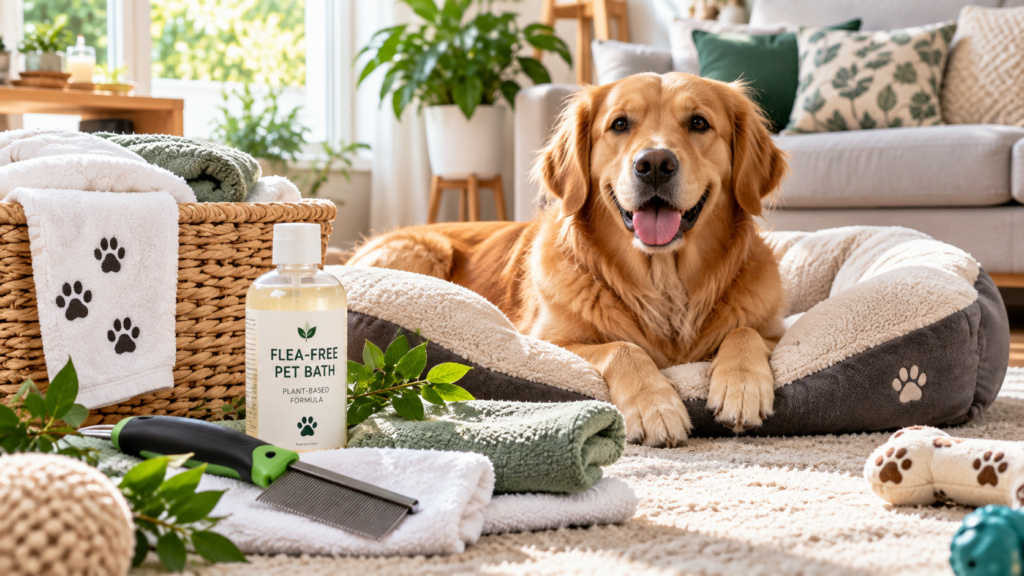
If your dog is scratching nonstop, the fleas are already ahead of you.
Here’s how to treat fleas at home using safer, chemical-free methods that actually help — without turning your house into a fog of harsh sprays.
The fastest natural approach is not one homemade oil mix. It is a full-home system: comb the dog daily, wash bedding on heat, vacuum every day, and only then add gentle supportive treatments. Most light cases improve in 7–14 days when you treat the pet and the house together.
Save this method — fleas come back if you treat the dog and ignore the carpet.
Quick Answer
The safest chemical-free flea plan for dogs is daily flea combing, hot washing of bedding, thorough vacuuming, and a mild bath. Food-grade diatomaceous earth can help on dry floors and yard edges. Essential oils should be used carefully or skipped. If your dog has scabs, hair loss, or seems miserable, call your vet. Natural methods work best for prevention and light infestations.
Why Fleas Keep Coming Back
Fleas do not live only on your dog. Adult fleas feed on the pet, but eggs drop into bedding, rugs, furniture, and floor cracks. In a warm house, those eggs can turn into new fleas again and again.
That is why a single bath rarely solves the problem. You can wash the dog on Monday and see scratching again by Thursday if the home is still infested. In 2026, the most reliable natural treatment is still the old one: break the life cycle in more than one place.
My Personal Experience with “Natural Only” Flea Control
A client once asked me for a chemical-free plan because their dog had reacted badly to a store treatment. The dog was a medium-sized mixed breed that slept on a living-room couch and a washable bed. They had already tried a vinegar rinse and were ready to give up.
We did not start with oils. We started with a flea comb over a white towel. In ten minutes, the towel had enough flea dirt and a few live fleas to prove the problem was active. Then we washed the dog bed, vacuumed the couch cushions, and bagged the vacuum contents outside. After that, we added a mild bath and daily combing.
The scratching dropped in the first week. By the second week, we were finding far fewer fleas on the comb. The turning point was not a miracle spray. It was consistency. That case is why I still tell people: treat the dog, treat the bedding, treat the floors. Skip one of those, and the fleas win.
Safe Chemical-Free Methods That Work
1. Flea Comb Every Day
This is the most underrated method. A fine-toothed flea comb physically removes adult fleas and flea dirt.
Comb the dog over a pale towel or paper so you can see what you catch. Pay extra attention to:
- the base of the tail
- the belly
- the inner thighs
- the neck and behind the ears
Dip the comb in soapy water after each pass so fleas cannot jump back on. Do this daily for at least two weeks, even after the dog looks better.
2. Wash Bedding on High Heat
Wash the dog bed, blankets, crate pads, and any washable couch covers. Use the hottest water the fabric can handle and dry on high heat for at least 30 minutes.
If an item cannot be washed, seal it in a plastic bag for several days and vacuum it thoroughly. Fleas and eggs hide in fabric much more than people expect.
3. Vacuum Like It Matters
Vacuum carpets, rugs, sofa edges, baseboards, and the spot where the dog sleeps. Empty the canister or bag outside immediately.
This step matters because vacuuming picks up eggs and larvae before they become biting adults. In a real infestation, vacuum daily for the first week, then every other day for two more weeks.
4. Give a Mild Bath
A gentle bath with a mild dog-safe shampoo can reduce fleas on the body. Work the lather from the neck down so fleas do not run to the face. Leave the shampoo on for a few minutes, then rinse well.
Do not use dish soap as a regular treatment. It can dry the skin. A simple dog shampoo plus combing is safer for most pets.
5. Use Food-Grade Diatomaceous Earth Carefully
Food-grade diatomaceous earth can help on dry floors, cracks, and outdoor resting spots. Apply a very light dust, wait, then vacuum it up.
Do not puff clouds of it into the air. Do not rub it deep into the dog’s coat. Keep it away from the dog’s eyes, nose, and mouth. Used lightly on the environment, it can support the rest of the plan. Used heavily on the pet, it can irritate skin and lungs.
6. Clean the Yard and Resting Areas
If your dog spends time outside, fleas may be coming from shady resting spots, old blankets on the porch, or under decks.
- Wash outdoor dog beds
- Rake leaves away from favorite lying spots
- Keep grass trimmed
- Don’t leave damp towels in the same corner all week
Outdoor cleanup will not replace indoor vacuuming, but it reduces the chance of reinfestation.
7. Be Careful With Essential Oils
This is where many homemade recipes go wrong. Some oils that are fine for people are not safe for dogs, and many are dangerous for cats in the same house.
If you want a scent-based helper, keep it mild and off the dog’s face. A lightly diluted cedarwood or lavender wipe on bedding is sometimes used, but I do not recommend mixing strong “flea bomb” oil blends at home. If your dog has sensitive skin, skip oils entirely and stay with combing, washing, and vacuuming.
Comparison Table: Natural Flea Methods for Dogs
| Method | Effectiveness | Speed | Safety for Dogs | Best For | My Rating |
|---|---|---|---|---|---|
| Daily flea combing | Excellent | Immediate | Excellent | Adult fleas on the pet | 10/10 |
| Hot wash bedding | Excellent | Same day | Excellent | Eggs and fleas in fabric | 9.5/10 |
| Daily vacuuming | Excellent | 3–7 days | Excellent | Carpets, sofas, floor cracks | 9.5/10 |
| Mild bath | Very Good | Immediate | Very Good | Visible fleas on the coat | 8.5/10 |
| Food-grade DE on floors | Moderate | Slow | Good if light | Dry indoor and porch areas | 7.5/10 |
| Yard and bed cleanup | Good | 1–2 weeks | Excellent | Preventing reinfestation | 8/10 |
| Essential oil mixes | Low–Moderate | Short-term | Variable | Light deterrent only | 5/10 |
How Fast Will This Work?
- Day 1: combing and a bath reduce fleas on the dog
- Days 2–7: vacuuming and laundry start cutting down the next wave
- Week 2: scratching often drops if you stay consistent
- Week 3–4: keep monitoring. Fleas can hatch late if one hiding spot was missed
Natural treatment is not instant. It is steady.
Common Mistakes
The most common mistake is bathing the dog and doing nothing else. The second is using a strong essential oil blend because a social media recipe promised “chemical-free results in one night.”
Other mistakes I see often:
- forgetting the couch and car seat
- leaving the dog bed unwashed
- using too much diatomaceous earth
- stopping after three good days
- treating only the dog when two pets share the house
If you have a cat in the home, be even more cautious. What seems “natural” for a dog can be unsafe for a cat.
Pro Tips for Better Results in 2026
- Comb over a white towel so you can see flea dirt. It looks like fine black specks.
- Wash everything the dog sleeps on, not just the official dog bed.
- Vacuum the edge of rooms, not just the center of the carpet.
- Keep kids and other pets out of the room while dusting DE, then vacuum the excess.
- If one pet has fleas, assume the others need checking too.
- If the dog is still miserable after two weeks of consistent home care, get veterinary advice. Some dogs need extra help because of allergy or a heavier infestation.
If you’re also dealing with fleas on bedding, in the yard, or on a cat, use a separate plan for each situation. Cats especially should not be given the same oil-based recipes.
FAQ
Can I get rid of fleas naturally without any store products?
Yes, in light cases. Comb, wash, vacuum, and repeat. That combination is the core of a chemical-free plan.
Is apple cider vinegar enough?
A diluted rinse may help the coat a little, but it will not end an infestation by itself.
Is diatomaceous earth safe?
Food-grade DE can be useful on dry floors when used lightly. It is not a free pass to dust the dog from head to tail.
How do I know the treatment is working?
You should see fewer fleas on the comb, less flea dirt on the towel, and less scratching after the first week.
When should I call a vet?
Call sooner if the dog has hot spots, scabs, pale gums, extreme itching, or if a puppy is heavily infested.
A safe flea plan does not have to be complicated. Comb every day, wash the bedding, vacuum the house, and keep the dog’s resting areas clean. Add only the gentlest extras after that. That is the chemical-free system that holds up in real homes.
Have you tried a natural flea treatment for your dog? What helped most — combing, laundry, or something else?
Share your experience in the comments — I read every one and can help you adjust the plan.
Welcome to my pest control blog! I’m Dave Saunders, a seasoned pest management specialist with over 20 years of experience helping homeowners and businesses across the United States. My journey began in the sunny landscapes of California, where I honed my skills tackling a wide range of pests, from ants to spiders. Over the years, I’ve expanded my expertise to Florida and numerous other states, adapting to diverse climates and pest challenges.
With a deep passion for eco-friendly solutions, I’ve dedicated my career to providing practical, safe, and effective pest control methods. Whether it’s crafting natural repellents or sharing integrated pest management strategies, my goal is to empower you with the knowledge to maintain a pest-free home. Join me as I share insights from two decades in the field!
