
Hey everyone, Dave Saunders here.
As the weather cools down in fall, spiders start looking for warmer places to spend the winter. Many species that spent the summer outdoors begin moving toward homes, garages, basements, and attics. While most common household spiders are harmless, large numbers of them can become a real nuisance — and a few species can deliver painful bites.
The best time to deal with spiders is before they settle in for the winter. In this guide I’ll share the most effective natural methods I’ve used and recommended over the years to reduce spider activity in and around the home during fall.
Quick Answer
The most effective natural approach to fall spider control is a combination of sealing entry points, reducing outdoor habitat near the house, regular cleaning and vacuuming, and using natural repellents such as peppermint oil, vinegar solutions, and diatomaceous earth. When these steps are applied together in early to mid-fall, most homeowners see a significant drop in indoor spider activity.
Why Spiders Become More Noticeable in Fall
Several things happen at the same time in autumn:
- Many spider species mature and become more visible
- Cooler temperatures push them to seek shelter
- Outdoor food sources (insects) decline, so spiders move closer to human structures
- They look for protected cracks, corners, attics, basements, and cluttered areas to overwinter
Common fall invaders include common house spiders, cellar spiders, wolf spiders, and occasionally more concerning species depending on your region.
My Personal Experience with Fall Spiders
A few years ago I noticed a sharp increase in spiders in my garage and along the exterior walls of the house every September and October. At first I just knocked down webs, but they kept coming back. After paying closer attention, I realized the real issues were gaps around windows and doors, overgrown vegetation touching the house, and a buildup of leaves and debris along the foundation.
I spent one weekend sealing gaps, trimming plants away from the structure, clearing debris, and applying a peppermint oil spray around entry points and along baseboards. The difference was noticeable within two weeks. The following fall I repeated the process earlier and had far fewer spiders indoors. That experience shaped the prevention-focused approach I now recommend.
Most Effective Natural Methods for Fall Spider Control
1. Seal Entry Points (Most Important Long-Term Step)
Spiders (and the insects they follow) enter through small gaps. Focus on:
- Weatherstripping around doors and windows
- Gaps around pipes, vents, and utility lines
- Cracks in the foundation
- Damaged screens
Use caulk, expanding foam, and door sweeps. This single step dramatically reduces the number of spiders that make it indoors.
2. Reduce Outdoor Habitat Near the House
Spiders thrive in cluttered, protected areas. In fall you should:
- Trim shrubs and trees so they don’t touch the house
- Clear leaves, wood piles, and debris from around the foundation
- Move firewood away from the house
- Keep outdoor lighting to a minimum at night (lights attract insects, which attract spiders)
3. Regular Cleaning and Vacuuming
Indoors, regularly vacuum corners, baseboards, under furniture, and around windows. Pay special attention to basements, garages, and attics. Vacuuming removes spiders, egg sacs, and webs. Empty the vacuum canister or bag outside immediately afterward.
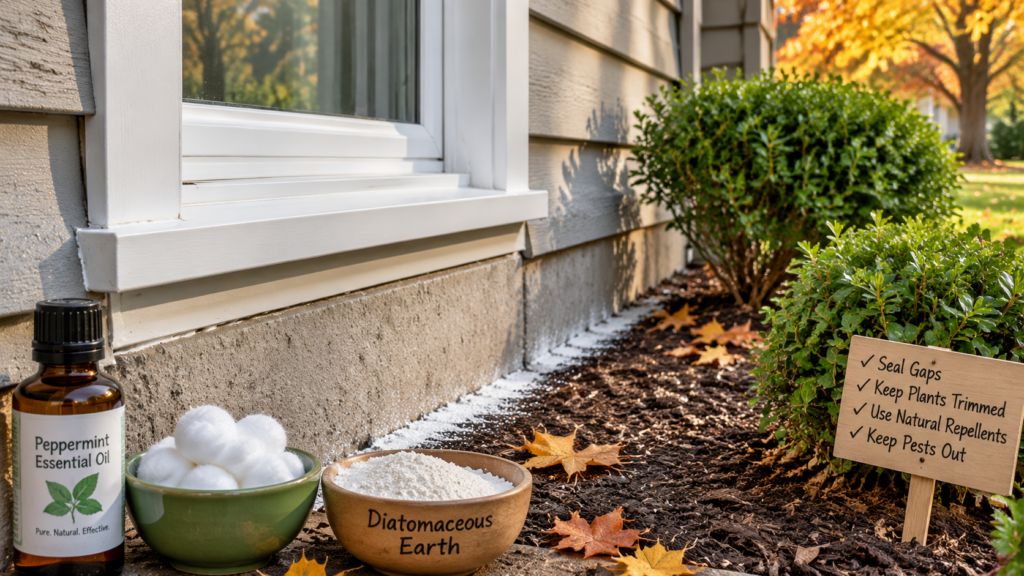
4. Peppermint Oil Spray
Spiders generally dislike the strong scent of peppermint.
Recipe:
- 2 cups water
- 15–20 drops peppermint essential oil
- 1 teaspoon mild dish soap
Spray around windows, doors, baseboards, and corners. Reapply every 5–7 days or after cleaning.
5. White Vinegar Solution
A simple 50/50 mix of white vinegar and water can be used to wipe down windowsills, door frames, and other entry areas. The scent helps deter spiders and also removes the chemical trails some insects leave behind.
6. Food-Grade Diatomaceous Earth
Lightly dust diatomaceous earth along baseboards, in corners, around window frames, and in dry areas of the garage or basement. It damages the exoskeleton of spiders and many other crawling pests. Keep it dry for best results.
7. Chestnuts and Other Folk Methods
Some people place conkers (horse chestnuts) in corners as a traditional deterrent. Scientific evidence is limited, but it is harmless and easy to try as a supplementary measure.
Comparison Table: Natural Fall Spider Control Methods
| Method | Effectiveness | Speed of Results | Cost | Safety | Ease of Use | Best For | My Rating |
|---|---|---|---|---|---|---|---|
| Sealing Entry Points | Excellent | Long-term | Low–Med | Excellent | Medium | Prevention | 9.5/10 |
| Reducing Outdoor Habitat | Excellent | 1–3 weeks | Free | Excellent | Medium | Long-term reduction | 9.5/10 |
| Vacuuming & Cleaning | Very Good | Immediate | Free | Excellent | Easy | Existing spiders & webs | 9/10 |
| Peppermint Oil Spray | Good | 3–7 days | Low | Excellent | Easy | Entry points & corners | 8.5/10 |
| Vinegar Solution | Moderate | 3–7 days | Low | Excellent | Easy | Windowsills & frames | 7.5/10 |
| Diatomaceous Earth | Good | 5–10 days | Low | Excellent | Easy | Baseboards & dry areas | 8/10 |
| Chestnuts / Folk Methods | Low–Moderate | Variable | Free | Excellent | Easy | Supplementary use | 6/10 |
Pro Tips for Better Results
- Start prevention in early fall before spiders begin moving indoors in large numbers.
- Combine sealing + habitat reduction + a natural repellent for the strongest effect.
- Focus extra attention on the south and west sides of the house — these areas often stay warmer and attract more activity.
- Don’t just remove webs indoors; also address the conditions that allow spiders to thrive near the house.
- If you find egg sacs, vacuum them carefully and dispose of the contents outside.
FAQ
Are most fall spiders dangerous?
The vast majority of spiders found in and around homes in North America are harmless. However, it’s still wise to reduce their numbers and avoid handling them.
Will natural methods completely eliminate spiders?
They can greatly reduce numbers, especially when used consistently. Complete elimination is unrealistic because spiders are extremely common in the environment.
How often should I reapply peppermint oil or vinegar sprays?
Every 5–7 days is usually sufficient, or more often in high-traffic or frequently cleaned areas.
Is diatomaceous earth safe to use indoors?
Food-grade diatomaceous earth is considered safe when used as directed. Avoid creating excessive airborne dust and keep it away from pets’ faces and sleeping areas.
Fall is the ideal time to get ahead of spider problems. By sealing entry points, reducing outdoor harborage, keeping the house clean, and using simple natural repellents, you can significantly cut down on the number of spiders that try to spend winter in your home.
Have you noticed more spiders indoors this fall? What methods have worked best for you?
Share your experiences in the comments — I read every one and am happy to offer more specific advice based on your situation.

Welcome to my pest control blog! I’m Dave Saunders, a seasoned pest management specialist with over 20 years of experience helping homeowners and businesses across the United States. My journey began in the sunny landscapes of California, where I honed my skills tackling a wide range of pests, from ants to spiders. Over the years, I’ve expanded my expertise to Florida and numerous other states, adapting to diverse climates and pest challenges.
With a deep passion for eco-friendly solutions, I’ve dedicated my career to providing practical, safe, and effective pest control methods. Whether it’s crafting natural repellents or sharing integrated pest management strategies, my goal is to empower you with the knowledge to maintain a pest-free home. Join me as I share insights from two decades in the field!
