
Hey folks, Dave Saunders here.
Fall is the season when mice start looking for warm, sheltered places to spend the winter. Garages are one of their favorite targets — they offer protection from the cold, easy access through small gaps, and often have cardboard boxes, pet food, or stored items that make perfect nesting material. If you’ve ever opened your garage door in October or November and spotted droppings or heard scratching sounds, you already know how quickly the problem can escalate.
The good news is you don’t need toxic poisons or harsh chemicals to keep mice out. Over the years I’ve helped many homeowners protect their garages using natural methods that are safer for pets, children, and the environment. In this guide I’ll share the most effective natural mouse repellents and prevention strategies that actually work in real-world conditions.
Quick Answer
The most effective natural way to keep mice out of your garage in fall is a combination of sealing all entry points, removing food sources and clutter, and using strong-smelling natural repellents such as peppermint oil, cloves, or commercial natural rodent deterrents. When these steps are used together, most people see a major reduction in mouse activity within 1–2 weeks.
Why Mice Invade Garages in Fall
As temperatures drop, mice actively search for warm, dry places to nest. Garages provide:
- Protection from cold and rain
- Easy entry through gaps under doors, around pipes, and through vents
- Nesting materials (cardboard, insulation, fabric, paper)
- Occasional food sources (pet food, bird seed, stored pantry items)
A mouse can squeeze through a gap as small as a dime. Once inside, they can multiply quickly if conditions are favorable.
My Personal Experience with Garage Mice
A few years ago I had a recurring mouse problem in my own garage every fall. The first year I tried ultrasonic devices and a few store-bought repellents, but the mice kept coming back. The real turning point came when I combined thorough sealing with strong peppermint oil treatments and better storage habits.
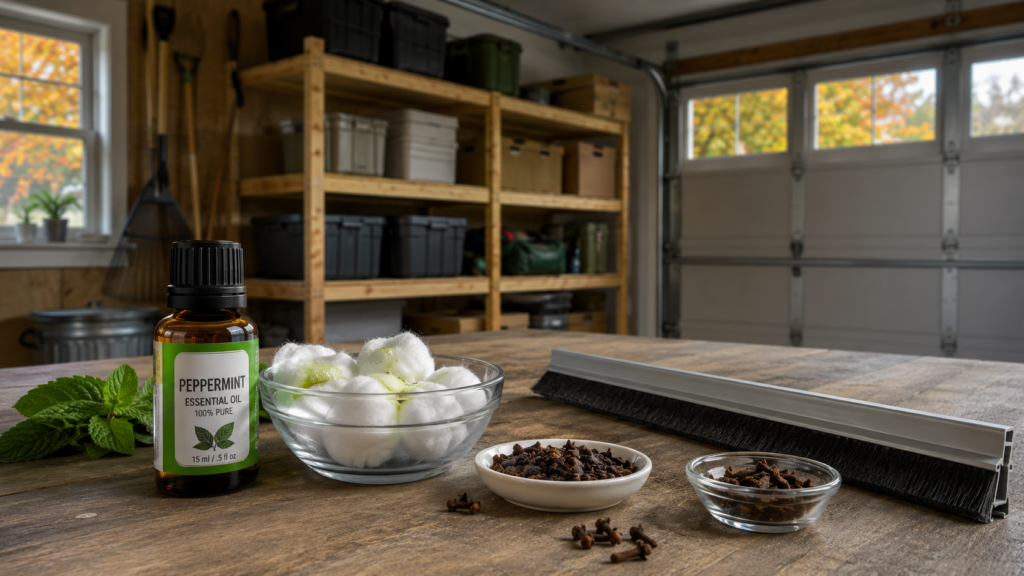
I sealed the gaps under the garage door, installed door sweeps, moved all pet food into sealed plastic containers, and placed cotton balls soaked in peppermint oil in key corners and along walls. Within ten days the activity dropped dramatically, and by the following fall the problem was almost completely gone. Since then I’ve refined this approach and recommended variations of it to many clients with similar success.
Most Effective Natural Mouse Repellents for Garages
1. Peppermint Oil (One of the Best Natural Options)
Mice strongly dislike the smell of peppermint. Soak cotton balls in pure peppermint essential oil and place them in corners, along walls, near entry points, and inside storage boxes. Refresh every 5–7 days, or more often if the scent fades.
Stronger Version: Mix 10–15 drops of peppermint oil with water and a teaspoon of dish soap in a spray bottle. Lightly spray along baseboards, door frames, and potential entry points (avoid spraying directly on electrical outlets).
2. Cloves and Clove Oil
Whole cloves or clove essential oil also repel mice. Place small dishes of whole cloves in corners or use clove oil on cotton balls the same way you would peppermint.
3. Dryer Sheets
Some people report success placing dryer sheets in corners and storage areas. Results are mixed, but they are easy and inexpensive to try as a supplementary method.
4. Ammonia
The smell of ammonia mimics the scent of predator urine and can deter mice. Place small open containers of ammonia in areas mice frequent (keep away from children and pets). Use with caution and good ventilation.
5. Natural Commercial Rodent Repellents
There are plant-based rodent repellent granules and sprays on the market that use ingredients like castor oil, peppermint, and other essential oils. These can be useful for larger garages when applied according to the label.
6. Ultrasonic Devices (Limited Effectiveness)
Some homeowners use ultrasonic pest repellers. Results vary widely, and many experts consider them only mildly effective at best. I recommend treating them as a secondary tool rather than a primary solution.
Comparison Table: Natural Mouse Repellents for Garages
| Method | Effectiveness | Duration | Cost | Safety | Ease of Use | My Rating |
|---|---|---|---|---|---|---|
| Peppermint Oil | Very Good | 5–7 days | Low | Excellent | Easy | 9/10 |
| Clove Oil / Whole Cloves | Good | 5–7 days | Low | Excellent | Easy | 8/10 |
| Sealing Entry Points | Excellent | Long-term | Low–Med | Excellent | Medium | 9.5/10 |
| Removing Food & Clutter | Excellent | Ongoing | Free | Excellent | Medium | 9.5/10 |
| Ammonia | Moderate | 3–5 days | Low | Caution needed | Easy | 7/10 |
| Natural Granules/Sprays | Good | 2–4 weeks | Medium | Very Good | Easy | 8/10 |
| Ultrasonic Devices | Low–Moderate | Continuous | Medium | Excellent | Easy | 5.5/10 |
Step-by-Step Natural Mouse Control Plan for Your Garage
Step 1: Inspect and Seal
Walk around the entire garage and look for gaps larger than ¼ inch. Pay special attention to:
- The bottom of the garage door
- Areas where pipes and wires enter
- Cracks in the foundation or walls
- Vents and windows
Install door sweeps, use steel wool + caulk for small holes, and repair damaged weatherstripping.
Step 2: Remove Attractants
- Store pet food, bird seed, and any food items in airtight plastic or metal containers
- Elevate cardboard boxes off the floor or replace them with plastic bins
- Clean up spills and crumbs promptly
- Reduce clutter so mice have fewer hiding places
Step 3: Apply Natural Repellents
Place peppermint oil cotton balls or clove treatments in corners, along walls, near the garage door, and in storage areas. Refresh regularly.
Step 4: Monitor and Maintain
Check for new droppings or signs of activity every few days. Reapply repellents as needed and continue good sanitation practices throughout the fall and winter.
Pro Tips from Experience
- Focus most of your sealing efforts on the garage door — this is the most common entry point.
- Combine at least two methods (sealing + peppermint oil) for much better results than using either alone.
- If you have pets, make sure any essential oils or ammonia are placed where animals cannot reach them.
- Reapply scent-based repellents more frequently in warm or well-ventilated garages because the smell dissipates faster.
- Consider adding a layer of natural rodent-repellent granules along the interior perimeter if the problem is persistent.
FAQ
How long does it take for natural methods to work?
Most people notice a reduction in activity within 7–14 days when sealing and repellents are used together consistently.
Are peppermint oil and cloves safe around pets?
When used properly (cotton balls placed out of reach), they are generally safe. However, essential oils can be toxic to cats and dogs if ingested in significant amounts, so place them carefully.
Can I get rid of mice permanently with natural methods?
You can greatly reduce or eliminate the problem, but permanent success depends on ongoing prevention — especially sealing entry points and removing food sources.
What if natural methods aren’t enough?
In cases of heavy infestation, you may need to combine natural prevention with traps. Avoid poisons if you have pets or children, and consider consulting a professional if the problem is severe.
Keeping mice out of your garage in fall is very achievable with the right combination of sealing, sanitation, and natural repellents. The key is consistency and addressing both the attractants and the entry points at the same time.
Have you dealt with mice in your garage before? What methods worked (or didn’t work) for you?
Share your experiences in the comments — I read every one and am happy to offer more specific advice for your situation.

Welcome to my pest control blog! I’m Dave Saunders, a seasoned pest management specialist with over 20 years of experience helping homeowners and businesses across the United States. My journey began in the sunny landscapes of California, where I honed my skills tackling a wide range of pests, from ants to spiders. Over the years, I’ve expanded my expertise to Florida and numerous other states, adapting to diverse climates and pest challenges.
With a deep passion for eco-friendly solutions, I’ve dedicated my career to providing practical, safe, and effective pest control methods. Whether it’s crafting natural repellents or sharing integrated pest management strategies, my goal is to empower you with the knowledge to maintain a pest-free home. Join me as I share insights from two decades in the field!
