
Hey everyone, Dave Saunders here.
Finding bed bugs on a mattress is one of those moments that immediately raises stress. People often want a fast, chemical-free solution they can do at home — especially if they have kids, pets, or simply prefer not to use harsh insecticides on the place they sleep.
A mattress can be treated naturally, but it has to be done the right way. Bed bugs hide in seams, piping, tufts, and the edges of the box spring. If you only spray the surface or shake the sheets, the problem usually comes back. In this guide I’ll walk you through a practical, chemical-free mattress treatment system that I’ve used and recommended for light to moderate cases.
Quick Answer
The most effective natural mattress treatment is a combination of thorough vacuuming, steam on seams and edges, a high-quality mattress encasement, and washing/drying all bedding on high heat. For many households, this combination reduces live bugs on the sleep surface quickly and prevents them from hiding in the mattress long-term. Severe infestations usually need a whole-room approach, not mattress treatment alone.
Why the Mattress Matters — But Is Not the Whole Problem
Bed bugs are attracted to warmth, carbon dioxide, and the shelter of a bed. The mattress is often the first place people look, and it is an important treatment zone. However, bed bugs also hide in:
- box springs
- bed frames and headboards
- baseboards
- nearby furniture
- electrical outlets and clutter close to the bed
That is why a mattress-only treatment can fail if the surrounding area is ignored. Treat the mattress first, then immediately protect it and clean the rest of the sleep area.
My Personal Experience with a Mattress Infestation
A client once called after noticing small blood spots on the sheets and a few live bugs along the piping of a queen mattress. They wanted a chemical-free option because a toddler used that bedroom.
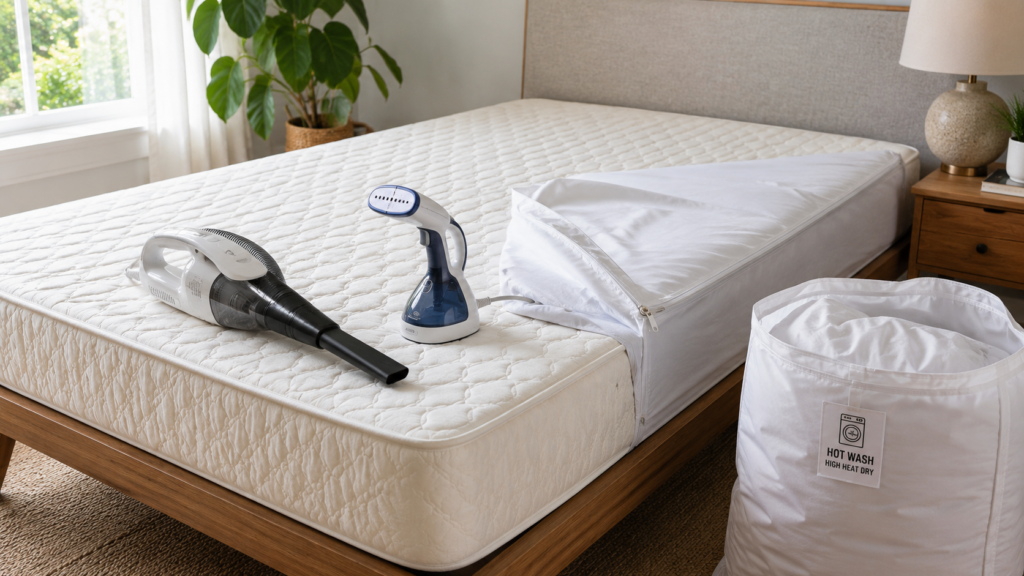
We did not start with powders or store-bought sprays. First we stripped the bed, bagged the bedding, vacuumed every seam slowly, and used steam along the piping and tufted areas. Then we immediately zipped the mattress into a certified bed bug encasement. The box spring and frame got the same vacuum-and-steam treatment. Within two weeks, nightly bites stopped. The encasement stayed on for several months as insurance.
That case reinforced a simple rule: the mattress needs both removal of bugs you can reach and a physical barrier so remaining bugs cannot feed or escape easily.
Step-by-Step Natural Mattress Treatment
Step 1: Isolate the Bed
Pull the bed at least 6 inches away from walls. Remove bed skirts, extra pillows, stuffed animals, and anything stored under the bed. Put dirty bedding into sealed plastic bags before carrying it through the house.
Step 2: Wash and Dry Bedding on High Heat
Wash sheets, pillowcases, mattress covers, and washable blankets in hot water. Dry on the highest heat setting the fabric can tolerate for at least 30 minutes. Heat is one of the most reliable natural killers of bed bugs and eggs on fabric.
Step 3: Vacuum the Mattress Thoroughly
Use a vacuum with a hose and crevice tool. Go slowly over:
- top and sides
- piping and seams
- tufts and handles
- the underside if accessible
Pay extra attention to corners. After vacuuming, immediately take the bag or canister outside and dispose of the contents in a sealed bag. Do not leave the vacuum sitting in the bedroom.
Step 4: Steam the Seams and Edges
A garment steamer or upholstery steamer can kill bed bugs on contact if the steam is hot enough and you move slowly. Focus on seams, piping, folds, and the edges of the mattress. Keep the steamer head close to the fabric and work in small sections. Do not soak the mattress. Let it dry completely.
Step 5: Encase the Mattress
This is the most important long-term step. Use a high-quality, zippered bed bug mattress encasement. Once the mattress is inside and the zipper is fully closed, bed bugs cannot easily hide in the mattress or come out to feed. Leave the encasement on for several months, even after activity appears to stop.
If possible, encase the box spring as well. Box springs are often worse hiding places than the mattress itself.
Step 6: Treat the Frame and Surrounding Area
Wipe or vacuum the bed frame, headboard, and nearby baseboards. If you use food-grade diatomaceous earth, apply only a very light dust in cracks of the frame and along baseboards — not in a thick layer on the sleeping surface. Keep powders away from children’s hands and pets’ faces.
Step 7: Monitor for at Least 2–4 Weeks
Use interceptor cups under bed legs if the frame allows it. Check seams of the encasement and nearby furniture every few days. Bed bugs can survive a long time without a meal, so one clean night does not mean the problem is over.
Comparison Table: Natural Mattress Treatment Methods
| Method | Effectiveness | Speed | Mattress Safety | Ease of Use | Best For | My Rating |
|---|---|---|---|---|---|---|
| Vacuuming | Very Good | Immediate | Excellent | Easy | Live bugs and debris | 9/10 |
| High-heat laundry | Excellent | Same day | Excellent | Easy | Sheets, covers, washable items | 9.5/10 |
| Steam on seams | Excellent | Immediate | Very Good | Medium | Seams, piping, edges | 9/10 |
| Mattress encasement | Excellent | Long-term | Excellent | Easy | Prevention + isolation | 9.5/10 |
| Diatomaceous earth | Moderate | Slow | Good* | Easy | Frames and cracks, not sleep surface | 7/10 |
| Essential oil sprays | Low–Moderate | Short-term | Variable | Easy | Light deterrent only | 5/10 |
| Professional heat/chemical | Excellent | Fast | Good | Easy | Heavy or spreading infestations | 9/10 |
*Use only food-grade product, lightly, and away from the sleeping surface.
What Does Not Work Well on a Mattress
- Lightly misting essential oils and hoping the infestation disappears
- Sprinkling large amounts of powder into the mattress
- Only washing the sheets
- Moving the mattress to another room without treating or encasing it
- Using outdoor insecticides on bedding
These shortcuts often spread the problem or create unnecessary exposure.
Pro Tips from Real Cases
- Treat the box spring with the same seriousness as the mattress.
- Encase first, then monitor. Do not keep unzipping the cover every day.
- Reduce clutter around the bed so bugs have fewer nearby hiding places.
- If more than one bedroom shows signs, treat all sleep areas, not just the “main” bed.
- If bites continue after two weeks of consistent DIY work, it is time to consider a professional inspection.
FAQ
Can I save the mattress?
Often yes, especially if the infestation is caught early and you use vacuuming, steam, and a quality encasement. A heavily infested, damaged, or very old mattress may not be worth saving.
Are essential oils enough?
No. Some oils may irritate or briefly deter insects, but they are not a reliable standalone mattress treatment.
Is diatomaceous earth safe on the mattress?
I do not recommend putting it on the sleeping surface. Use it lightly in cracks of the frame or along baseboards only, and keep it away from kids and pets.
How long should the encasement stay on?
At least 2–3 months after the last sign of activity. Many people leave it on permanently because it also protects against future problems and dust mites.
When should I call a professional?
If you see bugs in multiple rooms, if bites continue after thorough DIY treatment, or if anyone in the home has a strong reaction to bites.
A mattress can be treated naturally, but success depends on being thorough. Vacuum, steam the hiding spots, encase the mattress, clean the bedding with heat, and keep monitoring. That combination is far more effective than any single homemade spray.
Have you tried a chemical-free mattress treatment before? Did encasements and steam help, or did the problem spread beyond the bed?
Share your experience in the comments — I read every one and can suggest next steps based on what you’re seeing.
Welcome to my pest control blog! I’m Dave Saunders, a seasoned pest management specialist with over 20 years of experience helping homeowners and businesses across the United States. My journey began in the sunny landscapes of California, where I honed my skills tackling a wide range of pests, from ants to spiders. Over the years, I’ve expanded my expertise to Florida and numerous other states, adapting to diverse climates and pest challenges.
With a deep passion for eco-friendly solutions, I’ve dedicated my career to providing practical, safe, and effective pest control methods. Whether it’s crafting natural repellents or sharing integrated pest management strategies, my goal is to empower you with the knowledge to maintain a pest-free home. Join me as I share insights from two decades in the field!
