
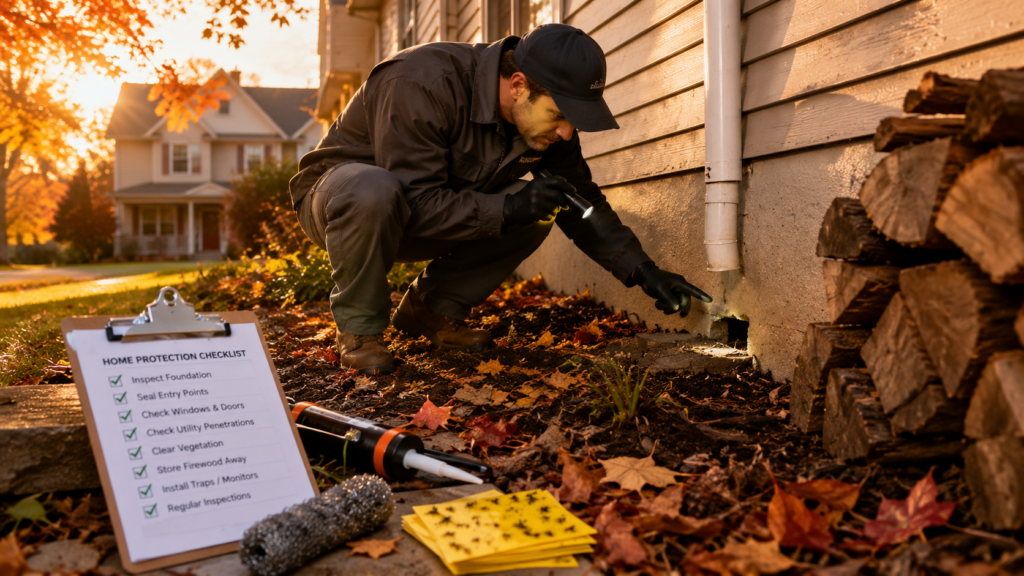
Hey folks, Dave Saunders here.
Fall is one of the most important seasons for homeowners who want to avoid serious pest problems during winter. As temperatures drop, rodents, insects, and other pests become much more aggressive in seeking shelter, warmth, and food. What starts as a few small entry points in October can turn into a full-blown infestation by January.
My Personal Fall Inspection Story
A few years ago I made the mistake of being too complacent. I had a busy autumn and told myself I’d do the inspection “next weekend.” That “next weekend” kept getting pushed back until it was already late November.
By December I started hearing scratching sounds in the walls and found mouse droppings in the pantry. What began as a small mouse entry point behind the dryer turned into a full family of mice living in the walls. At the same time, I discovered carpenter ants in the garage because I had missed wood-to-ground contact near the foundation.
It took me weeks of work, several thousand dollars, and a lot of frustration to fix what could have been prevented with just one careful afternoon inspection. That experience became a turning point for me. Since then, I’ve never skipped a thorough fall inspection, and I strongly encourage every homeowner to do the same. The few hours you spend now can save you months of headaches later.
Quick Answer
The most important thing you can do this fall is a complete exterior and interior inspection focusing on entry points, moisture, and food sources. Pay special attention to gaps around pipes, doors, windows, and the foundation. Catching problems now can save you thousands of dollars and months of stress later.
👉 Save this checklist — it’s the best investment you can make before winter.
Why Fall Is Critical for Pest Prevention
Pests are on a mission in autumn. They know winter is coming and they’re looking for safe, warm places with easy access to food. Mice, rats, carpenter ants, cockroaches, spiders, and even stink bugs become much more active in seeking entry points. Catching these issues early gives you time to seal, clean, and treat before they settle in for the winter.
Complete Fall Home Pest Inspection Checklist
1. Exterior Foundation and Walls
Start outside. Walk slowly around your entire house and look for:
- Cracks in the foundation (even small ones)
- Gaps where pipes and wires enter the house
- Rotting or damaged siding
- Spaces between the foundation and siding
2. Doors and Windows
Check every exterior door and window:
- Weatherstripping that’s worn or missing
- Gaps under doors (especially garage doors)
- Damaged screens
- Loose window frames
3. Roof and Attic Areas
- Look for damaged or missing shingles
- Check soffit vents and gable vents for gaps
- Inspect chimney flashing
- Make sure the attic is properly ventilated
4. Garage and Storage Areas
Garages are one of the most common entry points:
- Check the seal at the bottom of the garage door
- Look for gaps around pipes and conduits
- Inspect stored boxes and clutter (rodents love this)
5. Moisture Problems (The #1 Attractant)
Pests love moisture. Check for:
- Leaky gutters and downspouts
- Poor drainage around the foundation
- Standing water or damp areas
- Wet crawl spaces or basements
6. Wood and Structural Issues
- Look for wood-to-ground contact (big attractant for termites and carpenter ants)
- Check for soft or rotting wood
- Inspect decks, fences, and sheds close to the house
7. Kitchen and Interior Hot Spots
- Check under sinks for leaks
- Look behind appliances
- Inspect pantry for open food packages
- Check for crumbs and grease buildup
Comparison Table: Fall Inspection Priorities
| Area | Priority | Common Problems | Action Needed |
|---|---|---|---|
| Foundation | Critical | Cracks, pipe gaps | Seal + monitor |
| Moisture Sources | Critical | Poor drainage, leaks | Fix grading & gutters |
| Doors & Windows | High | Worn weatherstripping | Replace seals |
| Garage | High | Bottom door gap, clutter | Seal + organize |
| Roof & Attic | High | Vent gaps, damaged flashing | Repair |
| Wood Contact | High | Wood touching ground | Create 18″ clearance |
A thorough fall inspection is one of the smartest preventive measures you can take as a homeowner. Spending a few hours now can save you significant money, time, and stress during the winter months.
Have you done your fall pest inspection yet? What problems did you discover?
Share your experiences in the comments — I read every one and often reply with additional advice specific to your home and region.
Pro Tips from 20+ Years of Inspections
After performing hundreds of fall inspections, I’ve learned that the most successful homeowners are the ones who approach this task systematically. The biggest mistake people make is rushing through it. Take your time, use a good flashlight, and get down on your knees — many entry points are low to the ground.
Another key insight I’ve gained is that moisture is almost always the root cause. Even if you seal every visible gap, if there’s excess moisture around the foundation or in the crawl space, pests will find a way in. I always tell clients: fix the water first, then seal the gaps.
Also, don’t underestimate the power of decluttering. Woodpiles, leaf piles, and stored cardboard boxes right next to the house are basically “welcome mats” for rodents and insects. Moving these items even 18–24 inches away from the foundation makes a surprising difference.
FAQ
How long should a proper fall inspection take?
For an average home, plan on 2–4 hours.
When is the best time to do this?
Mid to late September through mid-October is ideal.
Should I hire a professional?
If you’re not comfortable doing a full inspection, hiring a professional once every 2–3 years is a good idea.
What’s the most common entry point I miss?
Gaps around utility pipes and the area where the garage door meets the floor.
A thorough fall home pest inspection is one of the smartest things you can do as a homeowner. Spending a few hours now can prevent major headaches (and expensive treatments) later.
Have you done your fall pest inspection yet? What did you find?
Share your experiences or questions in the comments — I read every one and am happy to give more specific advice based on your home and location.

Welcome to my pest control blog! I’m Dave Saunders, a seasoned pest management specialist with over 20 years of experience helping homeowners and businesses across the United States. My journey began in the sunny landscapes of California, where I honed my skills tackling a wide range of pests, from ants to spiders. Over the years, I’ve expanded my expertise to Florida and numerous other states, adapting to diverse climates and pest challenges.
With a deep passion for eco-friendly solutions, I’ve dedicated my career to providing practical, safe, and effective pest control methods. Whether it’s crafting natural repellents or sharing integrated pest management strategies, my goal is to empower you with the knowledge to maintain a pest-free home. Join me as I share insights from two decades in the field!
