
Hey everyone, Dave Saunders here.
If you grow houseplants or have a garden, you know how heartbreaking it is to watch your favorite plants slowly get damaged by insects. One day everything looks healthy, and the next you notice yellowing leaves, sticky residue, fine webbing, or holes in the foliage.
Over the years I’ve learned that the best way to deal with plant-damaging insects is not to wait until the problem gets bad — but to focus on prevention. In this detailed guide, I’ll share the most effective natural methods I use and recommend to protect plants before serious damage occurs.
Quick Answer
The most effective way to prevent plant damage from insects is a combination of strong plant health, regular monitoring, and natural preventive treatments (such as neem oil, insecticidal soap, and beneficial insects). Healthy plants are naturally more resistant to pests, and early intervention almost always prevents major damage.
My Personal Experience with Plant Pests
A few years ago I had a beautiful collection of tropical plants in my home office. I was proud of how well they were growing — until one day I noticed my monstera and two calatheas starting to look off. The leaves were developing strange yellow spots and fine webbing. It turned out to be a spider mite infestation that had already spread quite far.
At that time I was still quite new to dealing with indoor plant pests. I tried several treatments, but because I acted late, I lost two plants completely and spent months nursing the others back to health. That experience taught me a very important lesson: prevention is much easier and more effective than treatment.
Since then, I’ve developed a preventive routine that I follow with all my plants. It has dramatically reduced pest problems in my collection and in the homes of many clients I’ve advised.
Why Prevention Matters More Than Treatment
Once insects like aphids, spider mites, mealybugs, or thrips get established on a plant, they multiply very quickly. By the time you notice visible damage, the population is often already large. Treating an advanced infestation is much harder, more time-consuming, and stressful for both you and the plant.
Prevention focuses on three main pillars:
- Keeping plants healthy and strong
- Creating an environment that is less attractive to pests
- Using gentle, regular treatments that stop pests before they multiply
Most Effective Natural Ways to Prevent Plant Damage
1. Maintain Strong Plant Health
Healthy plants are much more resistant to insect attacks. Make sure your plants get the right amount of light, water, and nutrients. Over-fertilizing with nitrogen-rich fertilizers can make plants more attractive to sucking insects like aphids.
2. Regular Inspection
Get into the habit of checking your plants every week. Look under the leaves, at the stems, and in the soil. Early detection is one of the most powerful preventive tools.
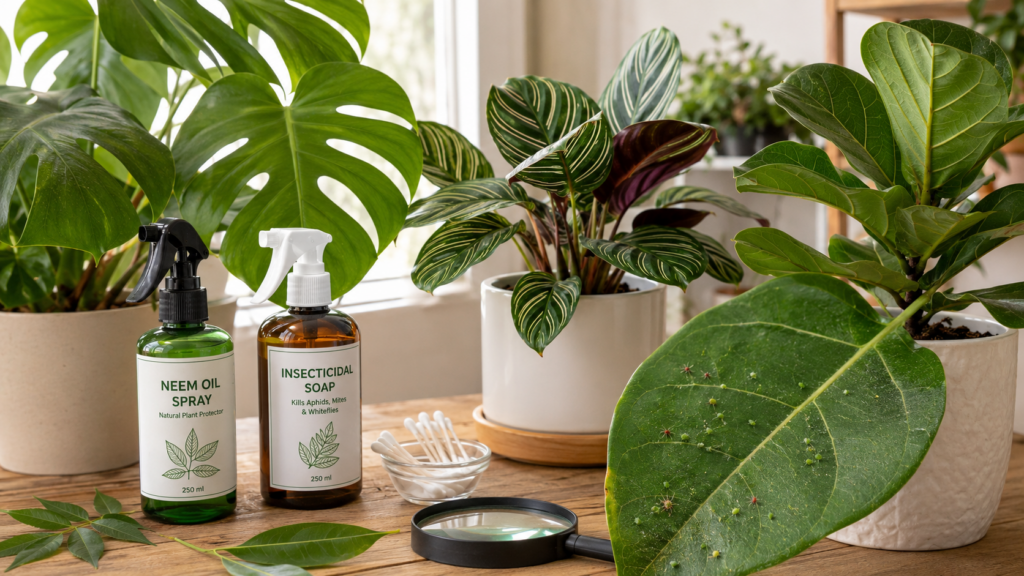
3. Neem Oil Preventive Spray
One of my favorite preventive treatments is a diluted neem oil spray used once every 2–3 weeks.
Preventive Neem Oil Recipe:
- 1 teaspoon neem oil
- 1 teaspoon mild liquid soap
- 1 liter of water
Mix well and lightly spray the tops and undersides of leaves. This disrupts the life cycle of many common pests before they become a problem.
4. Insecticidal Soap as Preventive Measure
A very mild insecticidal soap spray can be used weekly during high-risk periods (such as when bringing new plants home or during warm, humid weather).
5. Introduce Beneficial Insects
For larger collections or greenhouse conditions, beneficial insects like ladybugs, predatory mites, or lacewings can provide excellent long-term prevention.
6. Proper Watering and Humidity Management
Many pests (especially spider mites) thrive in dry conditions. Maintaining appropriate humidity levels and avoiding both overwatering and underwatering helps keep plants more resistant.
7. Quarantine New Plants
Always quarantine new plants for at least 2–3 weeks before placing them with your existing collection. This is one of the easiest ways to prevent introducing pests into your home.
Comparison Table: Preventive Methods
| Method | Effectiveness | Ease of Use | Cost | Safety | Frequency | My Rating |
|---|---|---|---|---|---|---|
| Strong Plant Health | Excellent | Medium | Low | Excellent | Ongoing | 9.5/10 |
| Weekly Inspection | Excellent | Easy | Free | Excellent | Weekly | 9.5/10 |
| Neem Oil Spray | Very Good | Easy | Low | Very Good | Every 2–3 weeks | 9/10 |
| Insecticidal Soap | Good | Easy | Low | Excellent | Weekly | 8.5/10 |
| Beneficial Insects | Excellent | Medium | Medium | Excellent | As needed | 9/10 |
| Quarantine New Plants | Excellent | Easy | Free | Excellent | Every new plant | 9.5/10 |
| Humidity & Watering | Very Good | Easy | Low | Excellent | Ongoing | 8.5/10 |
Additional Preventive Tips from Experience
- Avoid placing new plants directly next to your existing collection.
- Clean leaves regularly with a damp cloth — this removes eggs and early-stage pests.
- Don’t let plants sit in standing water.
- Rotate plants occasionally so all sides get light (stronger plants = fewer pests).
- Be extra vigilant during spring and summer when many pests are most active.
FAQ
How often should I use preventive sprays?
For most indoor plants, neem oil every 2–3 weeks during the growing season is usually enough.
Can I prevent pests completely?
You can dramatically reduce the risk, but it’s almost impossible to guarantee zero pests forever. The goal is early detection and quick response.
Are preventive treatments safe for all plants?
Most common houseplants tolerate neem oil and insecticidal soap well, but always test on a small area first, especially with sensitive plants like ferns or calatheas.
Preventing plant damage from insects is much easier and less stressful than dealing with a full infestation. With consistent habits and gentle natural methods, you can keep your plants healthy and beautiful year-round.
Have you had problems with plant-damaging insects before? What preventive methods have worked best for you?
Share your experience in the comments — I read every one and am happy to offer more specific advice for your plants.
Welcome to my pest control blog! I’m Dave Saunders, a seasoned pest management specialist with over 20 years of experience helping homeowners and businesses across the United States. My journey began in the sunny landscapes of California, where I honed my skills tackling a wide range of pests, from ants to spiders. Over the years, I’ve expanded my expertise to Florida and numerous other states, adapting to diverse climates and pest challenges.
With a deep passion for eco-friendly solutions, I’ve dedicated my career to providing practical, safe, and effective pest control methods. Whether it’s crafting natural repellents or sharing integrated pest management strategies, my goal is to empower you with the knowledge to maintain a pest-free home. Join me as I share insights from two decades in the field!
