
Hey everyone, Dave Saunders here.
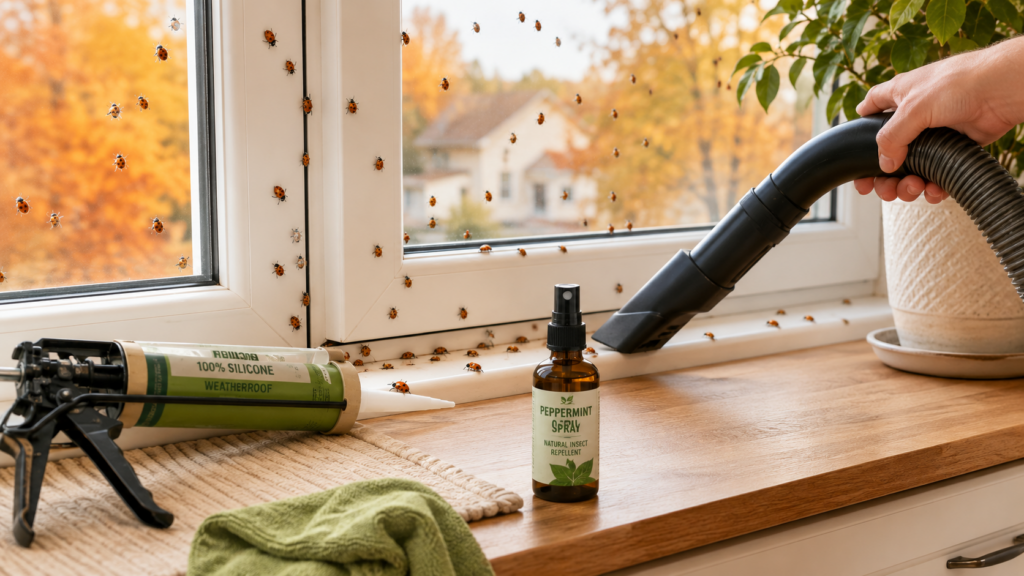
Ladybugs are usually considered beneficial insects in the garden, but when hundreds of them start swarming inside your home every fall, they quickly become a major nuisance. I’ve received countless messages from homeowners dealing with this exact problem — ladybugs clustering in corners, on windows, and even in light fixtures.
While ladybugs are harmless and don’t bite or spread disease, their sheer numbers and the yellow staining they leave behind can be very annoying. In this detailed guide, I’ll share the most effective ways to get rid of ladybugs in the house safely and naturally.
Quick Answer
The best way to deal with a ladybug infestation indoors is a combination of sealing entry points, vacuuming, natural repellents, and preventive measures for the following year. Most people can significantly reduce the problem within a few days using these methods.
My Personal Ladybug Story
A few years ago I had one of the worst ladybug invasions I’ve ever seen. It was late October, and suddenly my south-facing windows were covered with hundreds of ladybugs. They were crawling into every crack and crevice, especially around the windows and in the attic.
I tried several methods before finding what really worked. The combination of sealing, vacuuming, and using natural repellents finally solved the problem. Since then, I’ve helped many clients with similar issues, and the system below has proven reliable year after year.
Why Ladybugs Enter Homes in Large Numbers
Ladybugs seek warm, protected places to overwinter. In their natural habitat, they gather in rock crevices or under tree bark. In suburban areas, houses provide the perfect substitute — especially light-colored walls that absorb heat and south-facing windows.
They are most active in late September through November when temperatures start dropping.
Most Effective Ways to Get Rid of Ladybugs Indoors
1. Vacuuming (The Fastest Immediate Solution)
The quickest way to reduce numbers is to vacuum them up. Use a vacuum with a hose attachment and empty the canister outside immediately after vacuuming. This prevents them from releasing their yellow defensive fluid (reflex bleeding) inside your home.
2. Seal Entry Points
This is the most important long-term solution. Ladybugs enter through tiny gaps, so focus on:
- Weatherstripping around windows and doors
- Gaps around pipes and wires
- Cracks in siding or foundation
- Attic vents and soffits
3. Natural Repellents
Ladybugs dislike certain smells. Effective options include:
- Peppermint oil spray
- Citrus oil spray
- Garlic spray
- Diatomaceous earth around entry points
Recipe for Peppermint Repellent Spray:
- 2 cups water
- 10–15 drops peppermint essential oil
- 1 teaspoon dish soap
Spray around windows, doors, and baseboards. Reapply every few days.
4. Light Management
Ladybugs are attracted to light. Turn off exterior lights at night or switch to yellow “bug lights” that attract fewer insects.
5. Prevention for Next Year
The best defense is preventing them from entering in the first place. Seal your home thoroughly in early fall before the main invasion begins.
Comparison Table: Ladybug Control Methods
| Method | Effectiveness | Speed | Cost | Safety | Ease of Use | My Rating |
|---|---|---|---|---|---|---|
| Vacuuming | Excellent | Immediate | Free | Excellent | Easy | 9.5/10 |
| Sealing Entry Points | Excellent | Long-term | Low | Excellent | Medium | 9.5/10 |
| Peppermint Oil Spray | Very Good | 1–3 days | Low | Excellent | Easy | 9/10 |
| Citrus/Garlic Spray | Good | 2–5 days | Low | Excellent | Easy | 8/10 |
| Professional Extermination | Excellent | Fast | High | Moderate | Easy | 7/10 |
Pro Tips from Experience
- Never crush ladybugs — they release a foul-smelling yellow liquid that stains surfaces.
- Vacuum in the evening when ladybugs are less active.
- Focus sealing efforts on the south and west sides of your house (they prefer sun-warmed walls).
- If you have a large infestation, combine vacuuming with sealing and repellent sprays for fastest results.
FAQ
Are ladybugs harmful to my home?
They don’t cause structural damage, but they can stain surfaces and become a nuisance in large numbers.
Should I kill them or release them outside?
Vacuuming and releasing them outside is the most humane option, but in heavy infestations, vacuuming and discarding is more practical.
Will they come back next year?
They likely will if entry points aren’t sealed. Prevention is key for long-term control.
Can I use chemical sprays?
I recommend avoiding them indoors. Natural methods are safer and usually just as effective when done consistently.
Getting rid of ladybugs in the house doesn’t have to be complicated or toxic. With the right combination of sealing, vacuuming, and natural repellents, you can solve the problem effectively and humanely.
Have you dealt with a ladybug infestation before? What methods worked (or didn’t work) for you?
Share your experiences in the comments — I read every one and am happy to offer more specific advice based on your situation.

Welcome to my pest control blog! I’m Dave Saunders, a seasoned pest management specialist with over 20 years of experience helping homeowners and businesses across the United States. My journey began in the sunny landscapes of California, where I honed my skills tackling a wide range of pests, from ants to spiders. Over the years, I’ve expanded my expertise to Florida and numerous other states, adapting to diverse climates and pest challenges.
With a deep passion for eco-friendly solutions, I’ve dedicated my career to providing practical, safe, and effective pest control methods. Whether it’s crafting natural repellents or sharing integrated pest management strategies, my goal is to empower you with the knowledge to maintain a pest-free home. Join me as I share insights from two decades in the field!
