Hey everyone, Dave Saunders here. I’ll be honest with you — for years I thought apple cider vinegar was the only real way to make a good fruit fly trap. I recommended it to everyone. Then one summer I had a client who couldn’t stand the smell of vinegar in her kitchen. She asked if there were other options. That question forced me to experiment, and I discovered several surprisingly effective fruit fly traps that don’t use apple cider vinegar at all.
Since then, I’ve tested these alternatives in my own home and with dozens of clients. Some of them actually work better than the classic ACV trap in certain situations. Today I’m sharing my top 6 DIY fruit fly traps without apple cider vinegar, ranked by effectiveness.
Quick Answer
The best fruit fly trap without apple cider vinegar is the Red Wine + Dish Soap Trap. It’s incredibly effective, smells much better than vinegar, and catches fruit flies fast. But depending on what you have at home, other options like the Milk + Sugar trap or the Banana Peel trap can work just as well.
👉 Save this article — you’ll want these recipes when fruit flies inevitably show up again.
Why Fruit Flies Are So Hard to Get Rid Of
Fruit flies are tiny but incredibly persistent. They can detect the smell of fermenting fruit from across the room. A single female can lay up to 500 eggs, and the whole life cycle can complete in just 8 days. That’s why simply killing the ones you see is never enough — you have to break their breeding cycle.
My Personal Experience
Two summers ago I had one of the worst fruit fly infestations I’ve ever seen in my own kitchen. I had just brought home a big basket of overripe peaches and plums. Within three days the kitchen was full of fruit flies. I tried the classic apple cider vinegar trap — it worked, but the smell was driving my wife crazy. She banned vinegar from the kitchen.
That’s when I started testing alternatives. I spent the next two weeks trying different combinations every day. Some were complete failures. Others surprised me with how well they worked. By the end of those two weeks, I had a much better understanding of what actually attracts and kills fruit flies.
Top 6 DIY Fruit Fly Traps Without Apple Cider Vinegar
#1 Best Overall: Red Wine + Dish Soap Trap
This became my new favorite after the vinegar ban.
Recipe:
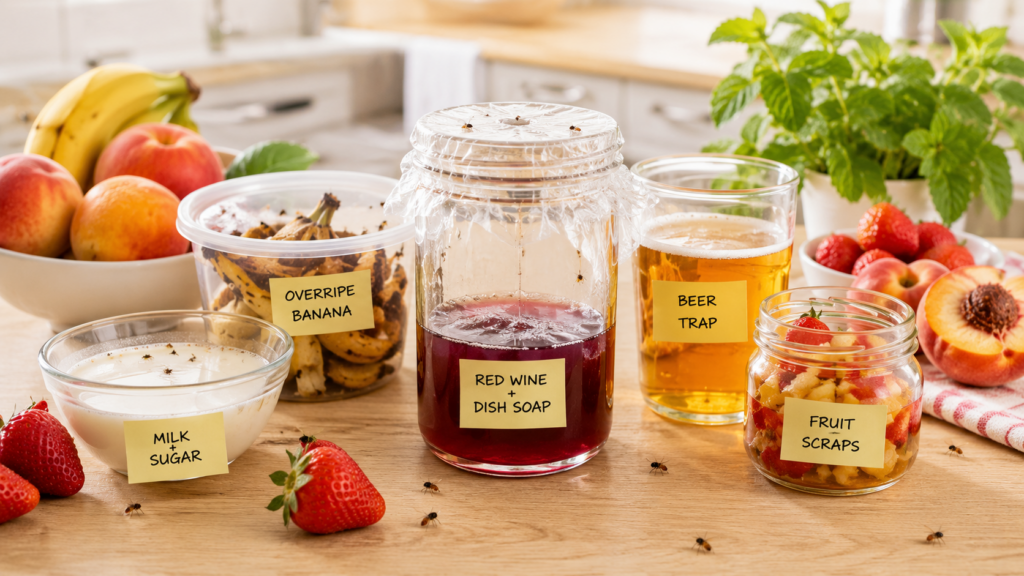
- ½ cup red wine (cheap wine works best)
- 2–3 drops dish soap
- Small jar or glass
Mix and cover with plastic wrap. Poke small holes in the wrap with a toothpick. Fruit flies are strongly attracted to the fermented smell of red wine, and the soap breaks the surface tension so they drown.
My experience: This trap consistently caught more flies than vinegar in my kitchen. The smell is much more pleasant, and my wife actually approved it.
Disclosure: As an Amazon Associate, we earn from qualifying purchases.
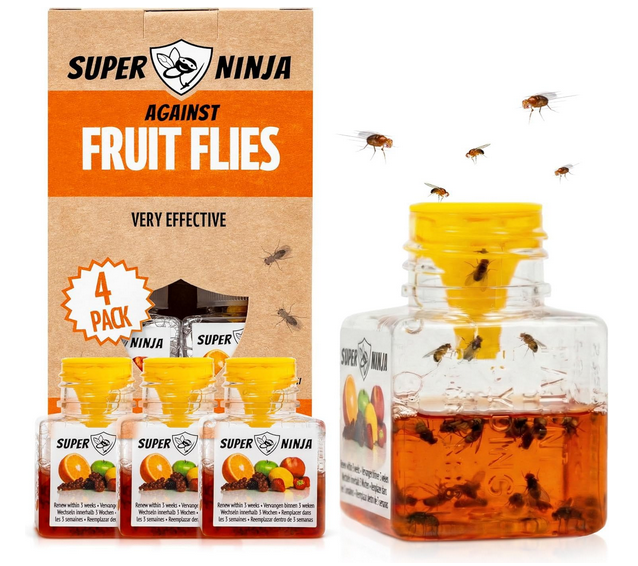
A Simple Way to Reduce Fruit Flies Fast
Indoor fruit fly traps are popular for kitchens where harsh sprays and strong chemical odors aren’t ideal
Check Price on Amazon#2 Best Budget Option: Milk + Sugar + Pepper Trap
An old-fashioned method that still works great.
Recipe:
- ½ cup milk
- 2 tablespoons sugar
- 1 tablespoon black pepper
Heat the milk slightly to dissolve the sugar, add pepper, pour into a shallow bowl or jar. The sweet milk attracts the flies, and they drown in it.
#3 Most Effective: Overripe Banana Trap
Sometimes the simplest is the best.
Recipe:
- One very overripe banana
- Small container or jar
- Plastic wrap
Mash the banana slightly, place it in the container, cover with plastic wrap and poke holes. The strong fermenting banana smell is irresistible to fruit flies.
#4 Best for Heavy Infestations: Beer Trap
Very similar to red wine but often even stronger.
Recipe:
- ½ cup beer (any cheap beer)
- 2 drops dish soap
Same method as the wine trap. Many people report beer works better than wine in their specific kitchen.
#5 Cleanest Option: Fruit Scrap Trap
Great if you hate the idea of leaving open liquids around.
Recipe:
- Leftover fruit scraps (melon rind, peach skins, strawberry tops, etc.)
- Small container
- Plastic wrap with holes
#6 Long-Term Option: Vinegar-Free Bottle Trap
Use any sweet liquid you have (orange juice, soda, etc.).
Recipe:
- ½ cup sweet liquid (orange juice, grape juice, cola)
- 1 teaspoon sugar
- 2 drops dish soap
Comparison Table: DIY Fruit Fly Traps Without ACV
| Rank | Trap Type | Effectiveness | Smell | Duration | Cost | My Rating |
|---|---|---|---|---|---|---|
| 1 | Red Wine + Dish Soap | Excellent | Pleasant | 5–7 days | Low | 9.5/10 |
| 2 | Milk + Sugar + Pepper | Very Good | Mild | 3–5 days | Very Low | 8.5/10 |
| 3 | Overripe Banana | Excellent | Strong | 4–6 days | Free | 9/10 |
| 4 | Beer Trap | Excellent | Mild | 5–7 days | Low | 9/10 |
| 5 | Fruit Scraps | Good | Strong | 3–5 days | Free | 7.5/10 |
Pro Tips for Maximum Success
- Place multiple traps in different locations — fruit flies can be in several spots at once.
- Empty and refresh traps every 2–3 days.
- Combine traps with thorough cleaning of drains and trash can.
- Keep all ripe fruit in the refrigerator until you’re ready to eat it.
- Fix any leaks under the sink — moisture attracts fruit flies.
Final Thoughts
You don’t need apple cider vinegar to win the war against fruit flies. These six alternatives have all proven themselves in real kitchens, including my own. The red wine trap is my current favorite, but I rotate between several depending on what I have available.
The most important thing is consistency. Use the traps, clean thoroughly, and remove food sources. Do this for two full weeks and you should see a dramatic improvement.
Have you tried making fruit fly traps without apple cider vinegar before? Which ingredients worked best for you?
Share your experience in the comments below — I read every single one and often reply with extra personalized suggestions.
Welcome to my pest control blog! I’m Dave Saunders, a seasoned pest management specialist with over 20 years of experience helping homeowners and businesses across the United States. My journey began in the sunny landscapes of California, where I honed my skills tackling a wide range of pests, from ants to spiders. Over the years, I’ve expanded my expertise to Florida and numerous other states, adapting to diverse climates and pest challenges.
With a deep passion for eco-friendly solutions, I’ve dedicated my career to providing practical, safe, and effective pest control methods. Whether it’s crafting natural repellents or sharing integrated pest management strategies, my goal is to empower you with the knowledge to maintain a pest-free home. Join me as I share insights from two decades in the field!
