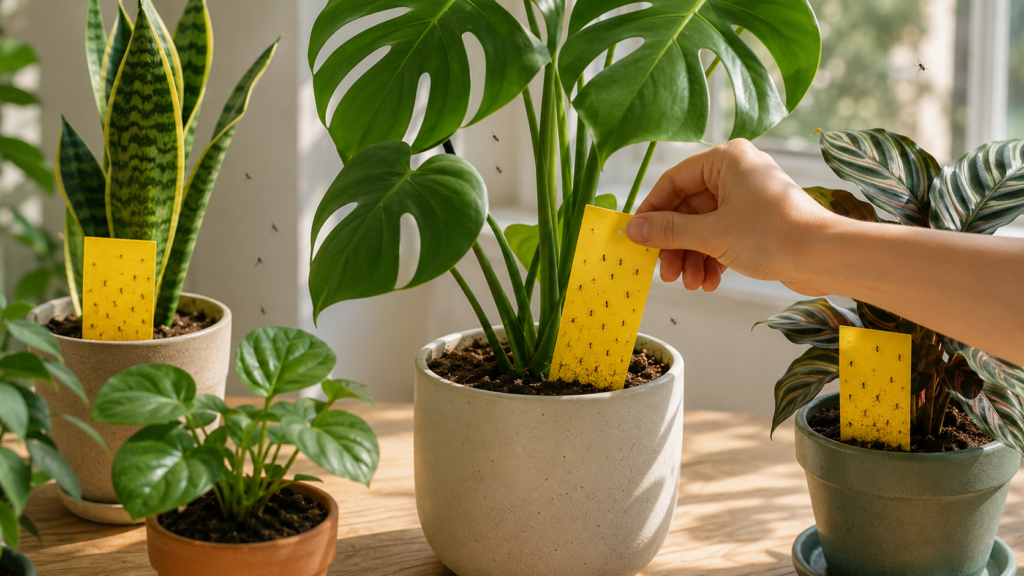
Hey everyone, Dave Saunders here. If you’re a houseplant lover, you know exactly what I’m talking about — those tiny black flies that suddenly appear out of nowhere, hovering around the soil like a miniature swarm. For years I thought they were fruit flies, but they were actually fungus gnats, and they had become one of the most frustrating pests in my indoor garden.
After battling multiple serious fungus gnat infestations in my own home (some of them quite bad), I’ve learned that yellow sticky traps are hands-down one of the smartest and most effective tools you can use. They’re simple, non-toxic, inexpensive, and when used correctly, they deliver excellent results.
In this detailed guide, I’ll share everything I’ve learned from real experience — including the mistakes I made in the beginning — so you can get control of fungus gnats much faster than I did.
Quick Answer
Yellow sticky traps work best when placed very close to the soil surface (1–2 inches above). For best results, combine them with letting the top layer of soil dry out between waterings and adding a thin layer of sand or diatomaceous earth on top. Most people see a dramatic drop in adult gnats within 7–10 days, and full control in 3–4 weeks.
👉 Save this guide — it will save you a lot of frustration and possibly many of your plants.
Disclosure: As an Amazon Associate, we earn from qualifying purchases.
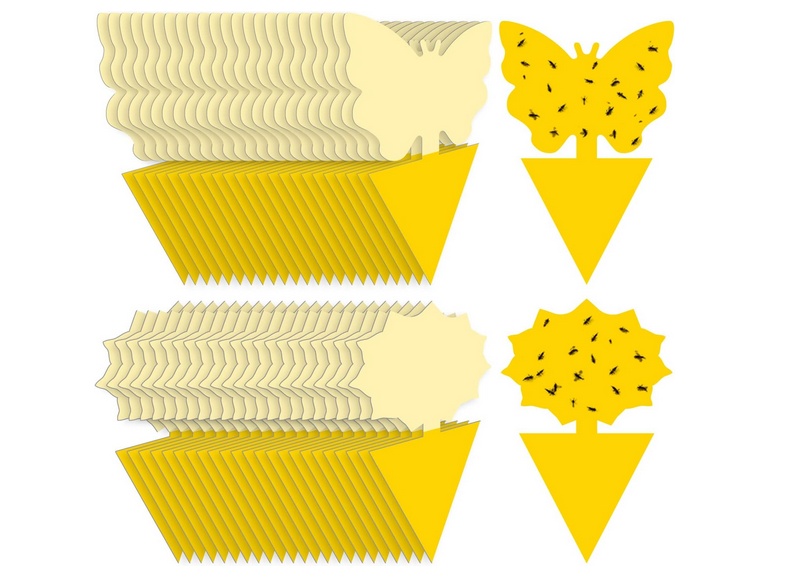
An Easy Way to Catch Flying Plant Pests
Sticky traps help monitor and capture fungus gnats, whiteflies, and other flying insects commonly found around indoor plants
Check Price on AmazonMy Personal Fungus Gnat Wars
The first time I had a serious fungus gnat problem was about four years ago. I had just expanded my indoor plant collection and was overwatering quite a few pots. One morning I noticed dozens of tiny black flies flying up when I touched the soil of my monstera and calathea. Within two weeks, almost every plant had them.
I tried letting the soil dry out completely (which stressed my plants), used hydrogen peroxide, and even bought beneficial nematodes. While those helped, the adult gnats kept appearing.
It wasn’t until I started using yellow sticky traps strategically that I finally gained the upper hand. In my worst infestation, I had over 40 traps around the house at one point. The sight wasn’t pretty, but within three weeks the population crashed. Since then, sticky traps have become a regular part of my plant care routine, and I rarely have major outbreaks anymore.
I’ve since helped dozens of clients solve similar problems, and the results are consistently good when people follow the full system.
Why Fungus Gnats Are So Hard to Eliminate
Fungus gnats have a fast life cycle. The adults lay eggs in moist soil, the larvae feed on roots and organic matter, and new adults emerge every 2–3 weeks. That’s why simply killing the flying adults isn’t enough — you need to break the cycle.
Yellow sticky traps excel at catching the adults before they can lay more eggs.
How to Use Yellow Sticky Traps – Step-by-Step Guide
Step 1: Choose the Right Traps
I recommend bright yellow sticky traps made specifically for houseplants. Avoid the very large ones meant for greenhouses unless you have a heavy infestation. Smaller 3×5 inch traps are ideal for most indoor setups.
Step 2: Correct Placement (This Makes All the Difference)
- Insert the trap into the soil so that the sticky surface starts about 1–2 inches above the soil line.
- Place traps near the base of the plant, slightly angled if possible.
- Use 1 trap for small pots, 2–3 traps for medium to large pots.
- For very heavy infestations, I sometimes place additional traps horizontally on the soil surface (secured with a stick).
Step 3: Timing and Replacement
- Put traps out as soon as you see the first adults.
- Check traps every 3–4 days.
- Replace them when they’re covered with gnats or every 7–10 days maximum.
- Continue using traps for at least 4 weeks, even after you stop seeing many gnats.
Step 4: Combine with Other Methods
Sticky traps work much better when you also:
- Let the top 1–2 inches of soil dry out completely between waterings.
- Add a ½-inch layer of sand, gravel, or diatomaceous earth on top of the soil.
- Remove dead leaves and debris from the soil surface.
An Easy Way to Catch Flying Plant Pests
Sticky traps help monitor and capture fungus gnats, whiteflies, and other flying insects commonly found around indoor plants
Check Price on AmazonComparison Table: Yellow Sticky Traps vs Other Fungus Gnat Methods
| Method | Effectiveness | Speed | Cost | Safety | Ease of Use | My Rating |
|---|---|---|---|---|---|---|
| Yellow Sticky Traps | Excellent | 7–14 days | Very Low | Excellent | Very Easy | 9.5/10 |
| Beneficial Nematodes | Excellent | 14–28 days | Medium | Excellent | Medium | 9/10 |
| Neem Oil Spray | Very Good | 10–21 days | Low | Very Good | Easy | 8.5/10 |
| Hydrogen Peroxide | Good | Fast | Very Low | Good | Easy | 8/10 |
| Soil Drying Only | Moderate | Slow | Free | Excellent | Medium | 7/10 |
Pro Tips I’ve Learned from Real Cases
- Use a small fan near your plants — fungus gnats hate airflow.
- Don’t place traps too high above the soil — they need to be close to where the gnats emerge.
- For large collections, number your traps and keep a simple log of how many gnats you catch each week.
- Sticky traps also catch other flying pests like whiteflies and thrips.
- If you have a severe infestation, combine traps with nematodes for faster results.
Common Mistakes People Make
- Placing traps too high above the soil.
- Not replacing traps often enough.
- Continuing to overwater plants.
- Expecting traps to solve the problem alone without changing watering habits.
FAQ
Are yellow sticky traps safe around pets and children?
Yes, they are non-toxic. Just place them where curious pets or small children can’t easily reach them.
How many traps should I use?
Start with 1–2 per plant and increase if needed.
Can I make my own sticky traps?
You can, but commercial yellow ones are usually more effective and less messy.
Will sticky traps kill all the gnats?
They kill the adults. To eliminate the larvae in the soil, you need to combine them with proper drying and top dressing.
Yellow sticky traps may not be the most beautiful solution, but they are incredibly effective, affordable, and safe. They’ve saved many of my plants and those of my readers over the years.
Have you dealt with fungus gnats before? Did you try sticky traps? What worked (or didn’t work) for you?
Drop your experiences in the comments — I read every single one and am always happy to offer more specific advice for your situation.
Welcome to my pest control blog! I’m Dave Saunders, a seasoned pest management specialist with over 20 years of experience helping homeowners and businesses across the United States. My journey began in the sunny landscapes of California, where I honed my skills tackling a wide range of pests, from ants to spiders. Over the years, I’ve expanded my expertise to Florida and numerous other states, adapting to diverse climates and pest challenges.
With a deep passion for eco-friendly solutions, I’ve dedicated my career to providing practical, safe, and effective pest control methods. Whether it’s crafting natural repellents or sharing integrated pest management strategies, my goal is to empower you with the knowledge to maintain a pest-free home. Join me as I share insights from two decades in the field!
