Hey everyone, Dave Saunders here.
Few things are more frustrating than discovering a trail of ants marching in and out of your favorite potted plant. One day the plant looks healthy, and the next you notice tiny workers exploring the soil surface or clustering around the drainage holes. While ants themselves rarely damage the plant directly, their presence often signals other problems — extra moisture, decaying organic matter, or even soft-bodied pests like aphids that produce honeydew.
Over the years I’ve dealt with ants in dozens of houseplants and outdoor containers. In this guide I’ll share the exact methods that have worked consistently for me and for the many plant owners I’ve advised.
Quick Answer
The fastest and safest way to remove ants from potted plants is a combination of soil drying, diatomaceous earth or cinnamon barriers, and bait stations placed near (not in) the pot. In most cases you can clear the ants within 3–7 days without harming the plant or using harsh chemicals.
Why Ants Invade Potted Plants
Ants are attracted to three main things in containers:
- Moisture in the soil
- Organic debris or decaying roots
- Honeydew from aphids, mealybugs, or scale insects living on the plant
Once they find a reliable food or water source, they establish a trail and may even start nesting in the potting mix if conditions stay favorable. Removing the ants without addressing these attractants usually leads to them returning.
My Personal Experience with Ants in Containers
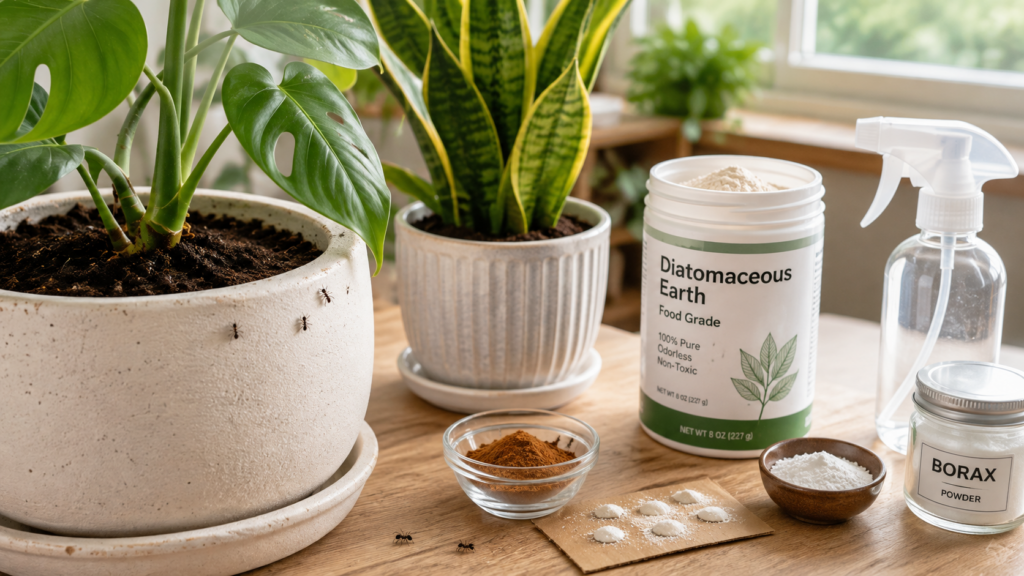
A couple of years ago I noticed ants regularly visiting a large monstera and two snake plants on my patio. At first I simply rinsed the soil surface, but the ants came back within days. After closer inspection I found a small aphid colony on the underside of the monstera leaves and slightly overwatered soil in one of the snake plants.
I treated the aphids, let the soil dry more thoroughly between waterings, applied a light layer of food-grade diatomaceous earth, and placed a few borax-sugar baits a short distance from the pots. Within a week the ant activity dropped dramatically, and after two weeks it was gone. That experience taught me that successful control almost always requires treating both the ants and the underlying conditions that attract them.
Step-by-Step Methods to Remove Ants from Potted Plants
1. Dry Out the Soil (Most Important First Step)
Ants prefer moist environments. Allow the top 1–2 inches of soil to dry completely between waterings. For most houseplants this simple change alone reduces ant interest significantly. Avoid letting the plant sit in a saucer of water.
2. Physical Removal and Rinsing
If the infestation is light, take the plant outdoors or to a sink and gently flush the soil surface with a stream of water. This washes away many of the visible ants. Let the pot drain thoroughly afterward.
3. Food-Grade Diatomaceous Earth
Lightly dust the soil surface and the rim of the pot with food-grade diatomaceous earth. The fine particles damage the ants’ exoskeletons. Reapply after watering. Keep it away from the plant’s leaves if possible.
4. Cinnamon or Coffee Ground Barriers
Sprinkle ground cinnamon or used coffee grounds around the base of the plant and on the soil surface. Many ants dislike crossing these barriers. Results vary, but they are completely safe and easy to apply.
5. Borax + Sugar Bait (Colony Elimination)
This is one of the most effective ways to eliminate the entire colony rather than just the workers you see.
Simple Recipe:
- 1 tablespoon borax
- 2–3 tablespoons sugar
- A few tablespoons of warm water
Mix into a syrupy paste. Place small amounts on pieces of cardboard or in bottle caps near the potted plant (not directly in the soil). Worker ants will carry the bait back to the nest. Keep baits out of reach of children and pets.
6. Insecticidal Soap or Neem Oil (If Aphids Are Present)
If you find aphids or other honeydew-producing insects, treat them with a mild insecticidal soap or diluted neem oil spray. Removing their food source often causes the ants to leave on their own.
7. Repotting (Last Resort for Heavy Infestations)
In severe cases where ants have nested deep in the root ball, carefully remove the plant, gently shake off as much old soil as possible, rinse the roots, and repot in fresh potting mix. This is more disruptive but highly effective.
Comparison Table: Ant Removal Methods for Potted Plants
| Method | Effectiveness | Speed | Plant Safety | Ease of Use | Best For | My Rating |
|---|---|---|---|---|---|---|
| Drying the Soil | Very Good | 3–7 days | Excellent | Easy | Prevention + light cases | 9/10 |
| Diatomaceous Earth | Excellent | 2–5 days | Excellent | Easy | Most infestations | 9.5/10 |
| Borax + Sugar Bait | Excellent | 5–14 days | Good* | Easy | Colony elimination | 9.5/10 |
| Cinnamon / Coffee Grounds | Moderate | Variable | Excellent | Very Easy | Light pressure / prevention | 7.5/10 |
| Flushing with Water | Good | Immediate | Excellent | Easy | Surface ants | 8/10 |
| Repotting | Excellent | Immediate | Good | Medium | Severe nesting | 8.5/10 |
*Keep bait away from children and pets.
Prevention Tips That Actually Work
- Avoid overwatering — this is the single biggest attractant.
- Remove fallen leaves and debris from the soil surface regularly.
- Inspect new plants carefully before bringing them indoors or placing them near other containers.
- Keep outdoor pots elevated slightly so ants have a harder time accessing the drainage holes.
- Use a thin layer of sand, gravel, or diatomaceous earth on top of the soil as a long-term deterrent.
FAQ
Will ants kill my plant?
Usually not directly. However, they can protect and farm aphids or other pests, which do damage the plant. Heavy nesting can also disturb roots in extreme cases.
Is borax safe to use around houseplants?
When used as a bait placed outside the pot, yes. Avoid mixing large amounts of borax directly into the soil, as it can harm the plant in high concentrations.
How long until the ants are completely gone?
With consistent drying + diatomaceous earth or baiting, most people see major improvement in under a week and full clearance in 1–2 weeks.
Can I use vinegar on the soil?
A light vinegar solution can disrupt trails, but repeated use may affect soil pH and plant health. I prefer safer options like diatomaceous earth and proper watering habits.
Removing ants from potted plants is very achievable when you combine moisture control with targeted natural treatments. The key is consistency — address the conditions that attract them and the ants themselves at the same time.
Have you dealt with ants in your houseplants or outdoor containers? What methods worked best for you?
Share your experiences in the comments — I read every one and am happy to offer more specific advice for your situation.
Welcome to my pest control blog! I’m Dave Saunders, a seasoned pest management specialist with over 20 years of experience helping homeowners and businesses across the United States. My journey began in the sunny landscapes of California, where I honed my skills tackling a wide range of pests, from ants to spiders. Over the years, I’ve expanded my expertise to Florida and numerous other states, adapting to diverse climates and pest challenges.
With a deep passion for eco-friendly solutions, I’ve dedicated my career to providing practical, safe, and effective pest control methods. Whether it’s crafting natural repellents or sharing integrated pest management strategies, my goal is to empower you with the knowledge to maintain a pest-free home. Join me as I share insights from two decades in the field!
