
Hey everyone, Dave Saunders here.
If you’ve ever walked into a room on a warm fall or winter day and found dozens of sluggish flies buzzing slowly around the windows, you’ve probably met cluster flies. They look similar to house flies at first glance, but they behave very differently. Instead of breeding in garbage, they enter homes in autumn to overwinter in attics, wall voids, and unused rooms.
Cluster flies don’t bite and they don’t breed indoors, but large numbers of them can be extremely annoying. The good news is that you can manage them effectively with natural methods and smart prevention — especially if you act in early to mid-fall.
Quick Answer
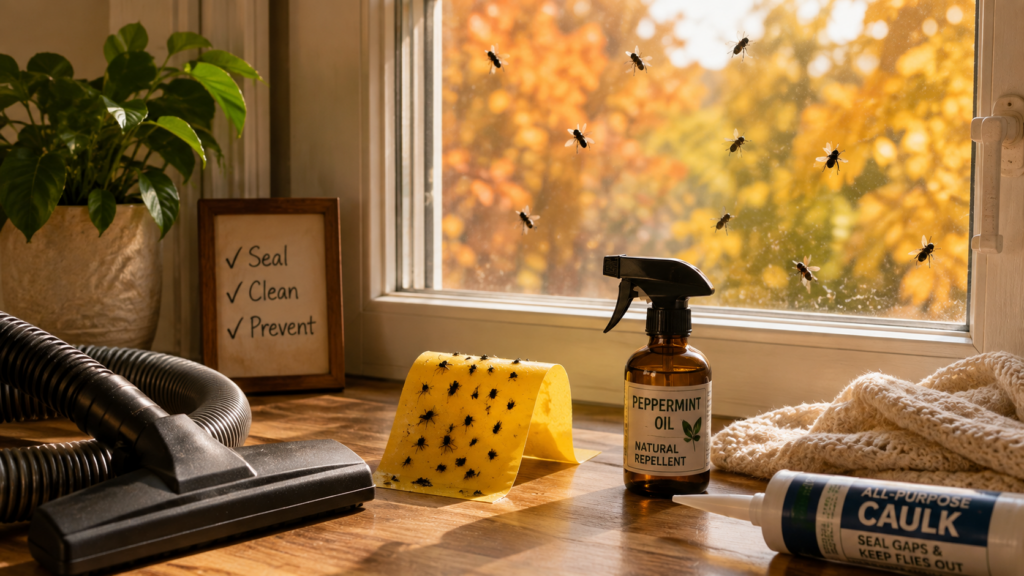
The fastest and most effective natural way to deal with cluster flies is a combination of sealing entry points, vacuuming visible flies, using light traps or sticky traps in problem rooms, and applying natural deterrents such as peppermint oil around windows and attic access points. Prevention in fall is far more effective than trying to eliminate large numbers after they’ve already moved inside.
Why Cluster Flies Invade Homes in Fall
Cluster flies (Pollenia species) spend the warmer months parasitizing earthworms in lawns and gardens. As temperatures drop, adults seek protected overwintering sites. Homes provide exactly what they want: warmth, darkness, and small cracks they can squeeze through.
They are especially attracted to:
- South and west-facing walls that absorb heat
- Attics, unused bedrooms, and wall voids
- Gaps around windows, soffits, vents, and utility penetrations
On warm days during winter they become active and gather on sunny windows, which is when most people first notice them.
My Personal Experience with Cluster Flies
A few years ago I had a recurring cluster fly problem in an older home with a large attic. Every October they started appearing on the second-floor windows. The first year I just vacuumed them as they showed up, but the numbers kept increasing.
The real improvement came when I combined three things: sealing obvious gaps around the attic and eaves, installing better weatherstripping on upstairs windows, and placing a few sticky traps in the rooms where they consistently gathered. The following fall the indoor numbers dropped dramatically. That experience confirmed what I’ve seen in many other homes — exclusion and early action matter more than any single spray.
Natural & Fast Ways to Get Rid of Cluster Flies
1. Seal Entry Points (Most Important Long-Term Fix)
Cluster flies enter through surprisingly small gaps. Focus on:
- Gaps around windows and window frames
- Soffits, eaves, and attic vents
- Cracks in siding and around utility lines
- Damaged screens and poorly fitted attic hatches
Use caulk, expanding foam, weatherstripping, and door/window sweeps. This is the single most effective long-term solution.
2. Vacuuming (Fastest Immediate Removal)
When cluster flies appear on windows, vacuum them up. Use a hose attachment and empty the canister or bag outside immediately. This is cleaner and more effective than swatting, which can leave stains.
3. Sticky Traps and Light Traps
Place yellow sticky traps or fly ribbons near windows in rooms where cluster flies gather. Some people also use indoor UV light traps in attics or unused rooms. These help reduce numbers of flies that have already entered.
4. Peppermint Oil Spray
Cluster flies, like many other insects, dislike strong mint scents.
Recipe:
- 2 cups water
- 15–20 drops peppermint essential oil
- 1 teaspoon mild dish soap
Lightly spray around window frames, attic access points, and other entry areas. Reapply every 5–7 days.
5. Soapy Water Spray (For Outdoor Clusters)
If you see clusters of flies on sunny exterior walls in fall, a spray of water mixed with a few drops of dish soap can knock them down. This is most useful before they find their way inside.
6. Reduce Outdoor Attractiveness
- Keep grass trimmed and reduce excessive thatch if possible
- Seal gaps in exterior walls early in fall
- Minimize unnecessary outdoor lighting that can attract insects to the house at night
7. Attic and Unused Room Management
If cluster flies are gathering in the attic:
- Improve screening on vents
- Seal gaps around pipes and wires
- Consider placing sticky traps in low-traffic attic areas
- Keep the space as uncluttered as possible so flies have fewer hiding spots
Comparison Table: Cluster Fly Control Methods
| Method | Effectiveness | Speed of Results | Cost | Safety | Ease of Use | Best For | My Rating |
|---|---|---|---|---|---|---|---|
| Sealing Entry Points | Excellent | Long-term | Low–Med | Excellent | Medium | Prevention | 9.5/10 |
| Vacuuming | Excellent | Immediate | Free | Excellent | Easy | Flies already indoors | 9.5/10 |
| Sticky Traps | Very Good | 1–7 days | Low | Excellent | Easy | Rooms with regular activity | 9/10 |
| Peppermint Oil Spray | Moderate | 3–7 days | Low | Excellent | Easy | Entry points & windows | 7.5/10 |
| Soapy Water Spray | Good | Immediate | Very Low | Excellent | Easy | Outdoor clusters | 8/10 |
| UV Light Traps | Good | Ongoing | Medium | Excellent | Easy | Attics & unused rooms | 8/10 |
| Professional Treatment | Excellent | Fast | Higher | Moderate | Easy | Heavy annual infestations | 8/10 |
Pro Tips for Better Results in 2026
- Start sealing and prevention in late summer or early fall, before large numbers of cluster flies begin looking for overwintering sites.
- Focus extra attention on the warmest sides of the house.
- Vacuum regularly during peak season instead of letting flies accumulate on windows.
- Combine exclusion with trapping for the best indoor results.
- Remember that cluster flies do not breed indoors — every fly you see entered from outside.
FAQ
Are cluster flies dangerous?
No. They do not bite, sting, or spread disease the way some other flies can. They are primarily a nuisance pest.
Why do they suddenly appear on warm winter days?
Cluster flies that overwintered in wall voids or attics become active when temperatures rise. They then move toward light, which is why they gather on windows.
Will killing the flies I see solve the problem?
It helps in the short term, but new flies will continue to enter if gaps remain unsealed. Prevention is more important than removal.
Can I use regular fly spray?
You can, but many indoor insecticide sprays have limited lasting effect against cluster flies that are already inside wall voids. Sealing and vacuuming are usually more practical.
Cluster flies are one of those seasonal pests that feel overwhelming when they first appear, but they are very manageable with the right approach. Seal the gaps, vacuum what gets inside, use simple traps and natural deterrents, and you’ll see a big difference by next fall.
Have you dealt with cluster flies before? Did sealing and vacuuming help, or did you need additional methods?
Share your experiences in the comments — I read every one and am happy to offer more specific advice for your situation.

Welcome to my pest control blog! I’m Dave Saunders, a seasoned pest management specialist with over 20 years of experience helping homeowners and businesses across the United States. My journey began in the sunny landscapes of California, where I honed my skills tackling a wide range of pests, from ants to spiders. Over the years, I’ve expanded my expertise to Florida and numerous other states, adapting to diverse climates and pest challenges.
With a deep passion for eco-friendly solutions, I’ve dedicated my career to providing practical, safe, and effective pest control methods. Whether it’s crafting natural repellents or sharing integrated pest management strategies, my goal is to empower you with the knowledge to maintain a pest-free home. Join me as I share insights from two decades in the field!
