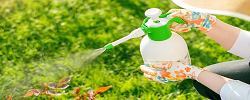
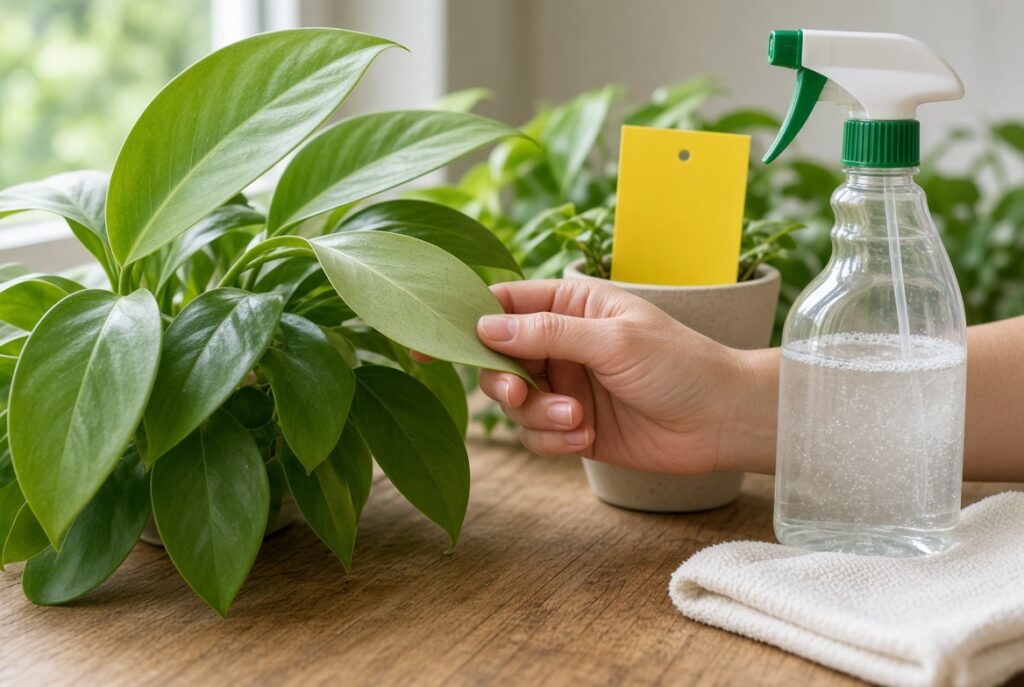
If your plants look perfect in May and chewed up by August, you’re not alone.
Here’s how to keep bugs off plants all season using a simple prevention system that actually holds up through heat, rain, and new growth.
The fastest way to keep plants pest-free is not one spray. It is a weekly habit: inspect leaves, water correctly, remove pests early, and rotate a few natural treatments before colonies explode.
Save this method — you’ll need it the first time aphids, spider mites, or whiteflies show up.
Quick Answer
The best all-season approach is prevention first, then early treatment. Keep plants healthy, inspect them once a week, isolate new plants, and use a rotation of insecticidal soap, neem oil, and physical removal. Most people who stay consistent see far fewer infestations from spring through fall.
Why Bugs Keep Coming Back
Pests don’t appear out of nowhere. They show up when conditions favor them:
- New tender growth after fertilizing
- Dry, dusty leaves that attract spider mites
- Overwatering that creates fungus gnats
- Plants packed too closely together
- One infested plant brought home from a store
If you only spray after damage is obvious, you are already behind. The goal all season is to make the plant a poor place for pests to settle.
My Personal Experience with Season-Long Plant Pests
One summer I made the classic mistake. I treated aphids on a hibiscus, saw the leaves look better, and stopped checking. Two weeks later the same plant had aphids again, plus ants farming them. Nearby, a fiddle leaf fig developed spider mites because I had been watering the soil but ignoring the dry undersides of the leaves.
That season taught me more than any product review. The plants that stayed clean were not the ones I sprayed the most. They were the ones I inspected weekly, wiped down, and treated at the first sign of sticky residue, speckling, or tiny movement on the stems.
Since then I use the same seasonal system for houseplants, patio containers, and garden beds. It is not dramatic. It is consistent. And consistency beats a “miracle spray” every time.
The All-Season System That Works
Step 1: Inspect Before You Water
Once a week, look at the new growth, leaf undersides, stems, and soil surface. This takes two minutes per plant and catches problems before they spread.
What to look for:
- Sticky leaves or shiny residue
- Tiny white flies when you touch the plant
- Fine webbing near leaf joints
- Yellow stippling on leaves
- Cottony spots in leaf axils
- Ants traveling up stems
If you catch pests at this stage, you can often stop them with a rinse and one soap spray.
Step 2: Quarantine Every New Plant
This is the most ignored rule and one of the most important. Keep a new plant away from the rest of your collection for 10–14 days. Inspect it twice during that period. Many infestations start with one “healthy-looking” plant from a nursery.
Step 3: Fix the Conditions Pests Love
Healthy plants resist pests better. That does not mean they never get bugs, but they recover faster.
- Don’t overfertilize. Soft, oversized growth attracts aphids.
- Don’t let dust sit on indoor leaves. Wipe them with a damp cloth.
- Don’t keep soil constantly wet unless the plant requires it.
- Give plants enough airflow. Crowded shelves and dense foliage hide mites and mealybugs.
- Water the soil, not the habit of splashing leaves every day. Wet foliage can help some diseases even as it knocks off a few insects.
Step 4: Use Physical Removal First
Before mixing anything, remove what you can see.
- Rinse outdoor plants with a strong stream of water
- Wipe indoor leaves with a damp cloth
- Use a cotton swab with soapy water on mealybugs
- Prune heavily infested tips instead of spraying the same damaged growth over and over
Physical removal sounds too simple. In practice, it cuts the population fast and makes every spray more effective.
Step 5: Rotate 3 Natural Treatments
I don’t rely on one product all season. Pests adapt, and plants get stressed if you use the same oil spray too often in heat.
Insecticidal soap
Best for aphids, whiteflies, and soft-bodied insects. Spray leaf undersides until coated, then repeat after 5–7 days. It works on contact, not as a long leftover barrier.
Neem oil
Better as part of a system than as a one-time rescue. It helps with mites, immature whiteflies, and some chewing pests. Apply in the evening and avoid spraying in direct hot sun.
Diatomaceous earth or dry barriers
Useful around pots and on dry soil surfaces for crawling insects. Keep it off wet foliage and don’t expect it to solve a heavy leaf infestation by itself.
These don’t replace treatment, but they show you when fungus gnats or whiteflies are increasing. That early warning is valuable.
A Simple Weekly Routine
This is the routine I actually follow during peak season:
Monday or weekend check Walk the plants. Look under leaves. Check new growth.
If the plant is clean Wipe dusty leaves and move on. No spray needed.
If I see a few pests Rinse or wipe first. Then apply soap spray the same day.
If I see a spreading colony Isolate the plant. Treat every 5–7 days for two or three rounds. Check neighboring plants.
That rhythm is what keeps bugs off plants all season. Not a single heroic treatment in July.
Comparison Table: All-Season Pest Control Methods
| Method | Best Against | Speed | Plant Safety | How Often | Best Use | My Rating |
|---|---|---|---|---|---|---|
| Weekly inspection | All early infestations | Preventive | Excellent | Weekly | Season-long foundation | 10/10 |
| Quarantine new plants | Hidden hitchhikers | Preventive | Excellent | Every new plant | Stops spread | 9.5/10 |
| Water rinse / leaf wipe | Aphids, dust, mites start | Immediate | Excellent | As needed | First response | 9/10 |
| Insecticidal soap | Aphids, whiteflies | 1–3 days | Very Good | Every 5–7 days | Active soft-bodied pests | 9/10 |
| Neem oil | Mites, mixed pests | 3–7 days | Good | Every 7 days | Repeat treatment | 8.5/10 |
| Sticky traps | Gnats, whiteflies | Monitoring | Excellent | Replace as needed | Early warning | 8/10 |
| Diatomaceous earth | Crawling pests | Slow | Good | After watering | Soil line and pot rims | 7.5/10 |
How Fast Will This Work?
If you start before a heavy infestation:
- Day 1: visible pests decrease after rinsing and soap
- Days 3–7: remaining colonies collapse with a second treatment
- Week 2–3: plants start putting out cleaner growth
- Rest of season: weekly checks prevent most surprises
If the plant is already covered in mites or mealybugs, expect a longer process. Prevention is easier than rescue.
Common Mistakes That Bring Bugs Back
- Spraying only the top of the leaves
- Treating once and assuming the job is done
- Leaving infested plants next to clean ones
- Overwatering after a pest treatment
- Using the same oil spray in midday heat
- Ignoring ants, which often protect aphids
If pests return in the same spot, the hiding place or the routine is the problem, not just the product.
Pro Tips (Save These)
- Inspect new growth first. That’s where aphids start.
- Treat the undersides of leaves. That’s where mites hide.
- Keep one “hospital shelf” for sick plants.
- Don’t fertilize a plant that is already under pest pressure.
- After treatment, check the plants around it, not just the one that looked bad.
- For outdoor containers, lift the pot and check the drainage holes. Ants and slugs use them more often than people think.
If you’re also dealing with specific pests, check my guides on aphids, spider mites, fungus gnats, and ants in potted plants. They often appear together and need slightly different follow-up.
FAQ
Can I keep plants completely bug-free all year?
You can keep them mostly clean, but “zero insects forever” is not realistic. The goal is to stop damage before it becomes serious.
Is soap spray safe for all plants?
Most hardy plants tolerate it well. Test a few leaves first on sensitive plants like ferns, calatheas, and some succulents.
Should I spray every week even if I see no pests?
No. Unnecessary spraying stresses plants. Inspect weekly; spray only when needed.
What is the best all-purpose method?
Inspection plus insecticidal soap is the most useful combination for most home growers. Add neem when mites or mixed pests keep returning.
Do indoor and outdoor plants need different plans?
The system is the same. Outdoor plants just need more frequent checks after rain, heat waves, and new growth spurts.
Keeping bugs off plants all season is less about finding a perfect recipe and more about staying ahead of the problem. Inspect weekly, isolate new plants, remove pests early, and rotate simple natural treatments. Do that consistently, and most infestations never get the chance to take over.
Have you found a routine that keeps your plants clean through summer? What pest comes back the most in your home or garden?
Share your experience in the comments — I read every one and can help adjust the system for your plants.
Welcome to my pest control blog! I’m Dave Saunders, a seasoned pest management specialist with over 20 years of experience helping homeowners and businesses across the United States. My journey began in the sunny landscapes of California, where I honed my skills tackling a wide range of pests, from ants to spiders. Over the years, I’ve expanded my expertise to Florida and numerous other states, adapting to diverse climates and pest challenges.
With a deep passion for eco-friendly solutions, I’ve dedicated my career to providing practical, safe, and effective pest control methods. Whether it’s crafting natural repellents or sharing integrated pest management strategies, my goal is to empower you with the knowledge to maintain a pest-free home. Join me as I share insights from two decades in the field!
