
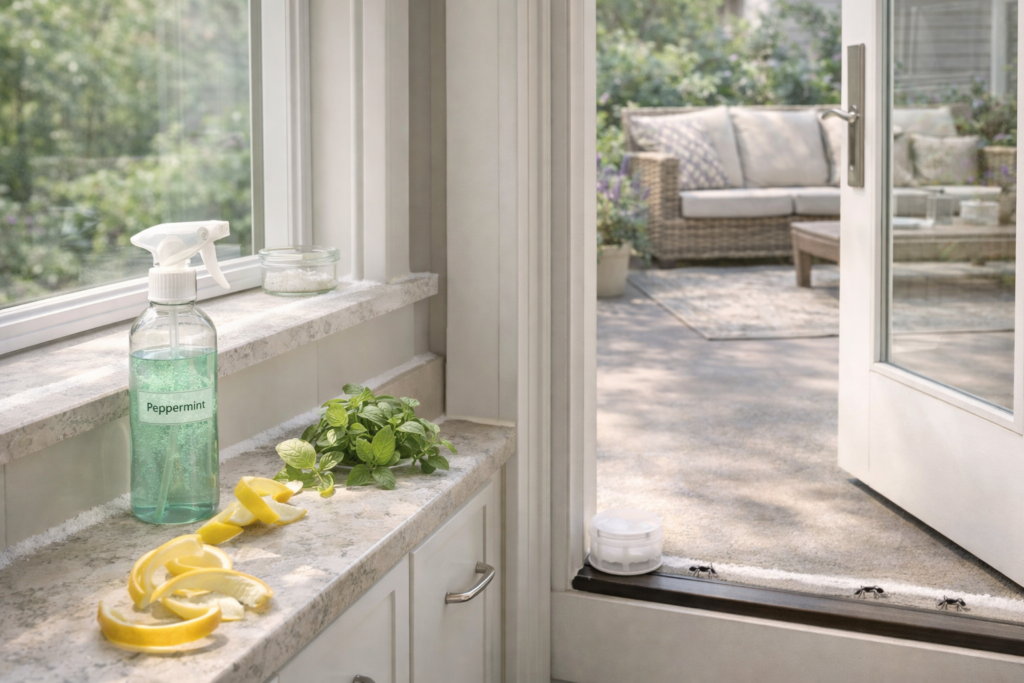
Hey folks, Dave Saunders here — your pest control specialist with over 20 years of hands-on experience dealing with ant invasions across the United States.
Every spring my phone starts ringing off the hook. Homeowners from Florida to California tell me the same story: “Dave, the ants are back again! They’re marching through the kitchen, crawling on the counters, and I don’t want to spray poison around my kids and pets.”
I’ve been there myself. In 2017, I had a serious ant problem in my own house in North Carolina. They were coming in through foundation cracks every spring like clockwork. After testing dozens of methods, I developed a reliable natural system that has worked for hundreds of my clients ever since.
In this detailed guide, I’ll share my Top 8 natural ways to stop ants from entering your house in spring, with exact recipes, step-by-step instructions, and real lessons from years of practical experience.
Why Ants Suddenly Invade Homes Every Spring
As temperatures rise, ant colonies wake up and become highly active. The queen sends out thousands of worker ants to scout for food and water. If they find even the smallest crumb, sweet spill, or drop of moisture, they lay down a pheromone trail that brings the entire colony into your home.
The most common entry points in spring are cracks around windows and doors, gaps near plumbing and electrical lines, foundation cracks, and areas around the garage and basement.
My Top 8 Natural Ways to Stop Ants from Entering the House
Here are the methods I recommend to my clients every spring, ranked by effectiveness and ease of use:
Borax + Sugar Bait (My #1 Most Effective Method)
Recipe: 1 tablespoon borax + 3 tablespoons white sugar + ½ cup warm water. Mix until the borax and sugar are completely dissolved. Soak cotton balls or place the liquid in small shallow caps or bottle caps. Place them near active ant trails, but out of reach of children and pets.
My personal experience: This is the single most effective natural method I’ve used in two decades. In 2019, I helped a family in Atlanta who had ants in every room. After placing these baits, the entire colony was gone within 10 days. The workers carry the bait back to the queen and larvae. Patience is key — it usually takes 7–14 days to eliminate the whole nest.
Disclosure: As an Amazon Associate, we earn from qualifying purchases.
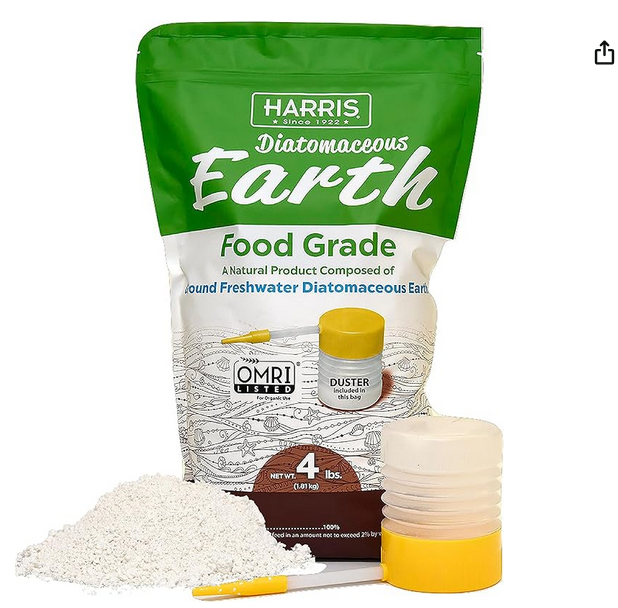
A Natural Powder Used Against Silverfish
Food-grade diatomaceous earth is commonly applied in dry corners and hidden bathroom spaces where silverfish appear at night.
Check Price on AmazonFood-Grade Diatomaceous Earth Barrier
How to use: Apply a very thin, almost invisible line of food-grade diatomaceous earth along baseboards, windowsills, door thresholds, behind appliances, and any cracks where you see ants. Reapply after vacuuming, mopping, or rain.
My personal experience: I always combine DE with borax baits. In Texas, one client had carpenter ants coming through the foundation. After creating a DE barrier and placing borax baits, the ants disappeared within a week. Remember: less is more — a thick layer doesn’t work as well as a thin one.
White Vinegar + Peppermint Spray
Recipe: 1 cup white vinegar + 1 cup water + 15 drops peppermint essential oil. Shake well and spray daily on windowsills, door frames, baseboards, and ant trails.
My personal experience: This spray destroys the pheromone trails ants use to navigate. I’ve used it successfully in many kitchens. One client in Florida told me the spray alone reduced ant activity by 70% within three days.
Cinnamon + Clove Powder Barrier
How to use: Mix equal parts ground cinnamon and ground cloves. Sprinkle a thin line along windowsills, door thresholds, and inside cabinets. Refresh every 3–4 days.
My personal experience: This is one of my favorite “pleasant smelling” barriers. I recommended it to an elderly couple in California who didn’t like strong chemical smells. The ants completely avoided their windowsills after two days.
Fresh Lemon Peel + Juice Barrier
How to use: Rub fresh lemon peels along windowsills, door frames, and thresholds. Then spray a mixture of lemon juice and water (1:1 ratio).
My personal experience: Ants strongly dislike citrus scents. I’ve seen this simple method work wonders around sliding glass doors and kitchen sinks. It’s cheap, safe, and leaves a fresh smell.
Peppermint Oil Spray (Strong Repellent)
Recipe: 20 drops peppermint essential oil + ½ cup water + ½ cup witch hazel. Spray around all entry points and ant trails twice a day.
My personal experience: This is one of the strongest natural repellents I use. In humid areas like Georgia and Florida, it performs especially well when combined with vinegar spray.
Sealing All Entry Points (Prevention First)
How to do it: Use clear silicone caulk or weatherstripping to seal cracks around windows, doors, pipes, electrical outlets, and the foundation. Pay special attention to areas where pipes enter the house.
My personal experience: This is the most important long-term solution. In one house in Ohio, simply sealing the cracks reduced ant problems by 90%. Prevention is always better than treatment.
Strict Kitchen Sanitation (The Golden Rule)
Daily habits: Wipe counters and tables after every meal, store all food in airtight containers, take out trash every evening, fix any leaks immediately, and sweep or vacuum floors daily.
My personal experience: Even the best baits and sprays won’t work if ants have easy access to food. One client in North Carolina told me that after he started taking out the trash every night and wiping counters, the ants almost disappeared, even before using any baits.
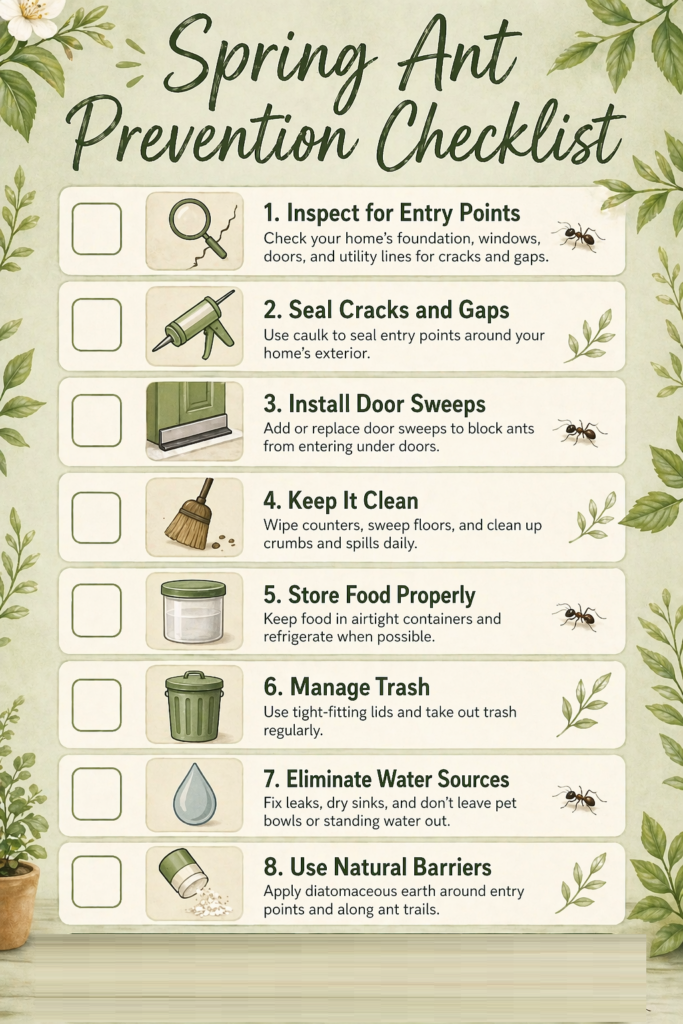
My Top Ant Prevention Methods
| Method | Effectiveness | Speed | Safety | Cost | Best For | My Rating |
|---|---|---|---|---|---|---|
| Borax + Sugar Bait | Excellent | 7–14 days | Good | Very Low | Killing the whole colony | 10/10 |
| Diatomaceous Earth Barrier | Very Good | 3–7 days | Excellent | Low | Creating a barrier | 9/10 |
| Vinegar + Peppermint Spray | Good | Immediate | Excellent | Very Low | Destroying trails | 8/10 |
| Cinnamon + Clove Powder | Good | 2–4 days | Excellent | Very Low | Pleasant smell barrier | 7/10 |
| Sealing Cracks | Excellent | Immediate | Excellent | Medium | Long-term prevention | 10/10 |
My Personal Spring Ant Defense Strategy (4-Step System)
After years of trial and error, I recommend this exact 4-step system to my clients every spring:
Step 1: Seal all visible cracks and entry points using caulk or weatherstripping.
Step 2: Place borax + sugar baits near active ant trails.
Step 3: Create a thin diatomaceous earth barrier along baseboards and entry points.
Step 4: Maintain daily sanitation and use peppermint or vinegar spray on windowsills and doors.
This combination gives the fastest and most lasting results I’ve seen in different house types and climates.
Have you already started seeing ants in your house this spring? Which method are you going to try first? Share your experience or your own favorite trick in the comments below — I read every single one and often update my guides based on real reader feedback.
Stay ant-free, my friends!
Welcome to my pest control blog! I’m Dave Saunders, a seasoned pest management specialist with over 20 years of experience helping homeowners and businesses across the United States. My journey began in the sunny landscapes of California, where I honed my skills tackling a wide range of pests, from ants to spiders. Over the years, I’ve expanded my expertise to Florida and numerous other states, adapting to diverse climates and pest challenges.
With a deep passion for eco-friendly solutions, I’ve dedicated my career to providing practical, safe, and effective pest control methods. Whether it’s crafting natural repellents or sharing integrated pest management strategies, my goal is to empower you with the knowledge to maintain a pest-free home. Join me as I share insights from two decades in the field!
